5. Reparations and Economic Cooperation
Based on the agreements concluded with them beginning in the 1950s, through the 1970s Japan would continue to provide Asian countries with reparations and cooperate with them economically.
Japan’s postwar reparations were based primarily on payments in the form of services rather than cash, though they also included payments in the form of goods. These efforts proceeded in parallel with economic cooperation. In addition, beginning with a loan to India in 1958 yen loans (repayable financial assistance provided on a low-interest, long-term basis) were also widely made available. The aim of these reparations and economic cooperation initiatives was to build friendly relations with Asian countries, contribute to Asia’s economic development, and simultaneously achieve Japan’s own economic recovery and development.
Even after the late 1970s when reparations payments had largely come to an end, Japan continued to provide grant aid, technical cooperation, and yen loans to developing countries.
TABLE: List of Reparations, Economic and Technical Cooperation (Grant Aid), etc.
| Country | Amount | Payment Period (Length in Years) |
|---|---|---|
| Reparation amount | ||
| The Philippines | US$550 million | July 23, 1956 – July 22, 1976 (20 years) |
| South Vietnam | US$39 million | January 12, 1960 – January 11, 1965 (4 years) |
| Burma | US$200 million | April 16, 1955 – April 15, 1965 (10 years) |
| Indonesia | US$223.08 million | April 15, 1958 – April 14, 1970 (12 years) |
| Economic and Technical Cooperation (Grant Aid), etc. | ||
| Laos | JP¥1 billion | January 23, 1959 – January 22, 1965 (6 years) |
| Cambodia | JP¥1.5 billion | July 6, 1959 – July 5, 1966 (7 years) |
| Thailand | JP¥9.6 billion | May 31, 1962 – May 31, 1969 (8 years) |
| Burma | US$140 million | April 16, 1965 – April 15, 1977 (12 years) |
| South Korea | US$300 million | December 18, 1965 – December 17, 1975 (10 years) |
| Malaysia | JP¥2.94 billion | May 7, 1968 – May 6, 1972 (4 years) |
| Singapore | JP¥2.94 billion | May 7, 1968 – March 31, 1972 (4 years) |
| Micronesia | JP¥1.8 billion | May 27, 1972 – May 26, 1975 (3 years) |
| Mongolia | JP¥5 billion | August 25, 1977 – August 24, 1981 (4 years) |
*Based on Ministry of Finance, Financial History Office, ed., Shōwa zaiseishi: Shūsen kara kōwa made [A financial history of Shōwa: From the war’s termination to the peace treaty], vol. 1 (Tokyo: Toyo Keizai Inc., 1984); and Ministry of Finance, ed. Zaisei kin’yū tōkei geppō [Monthly report on fiscal and financial statistics], No. 314 (June 1978).
◆Status of Reparations Made to Burma
[Document 36] Item: “Japan-Burma Reparations and Economic Cooperation Agreement: Implementation, Vol. 2” B24010096200 (Images 47–48)
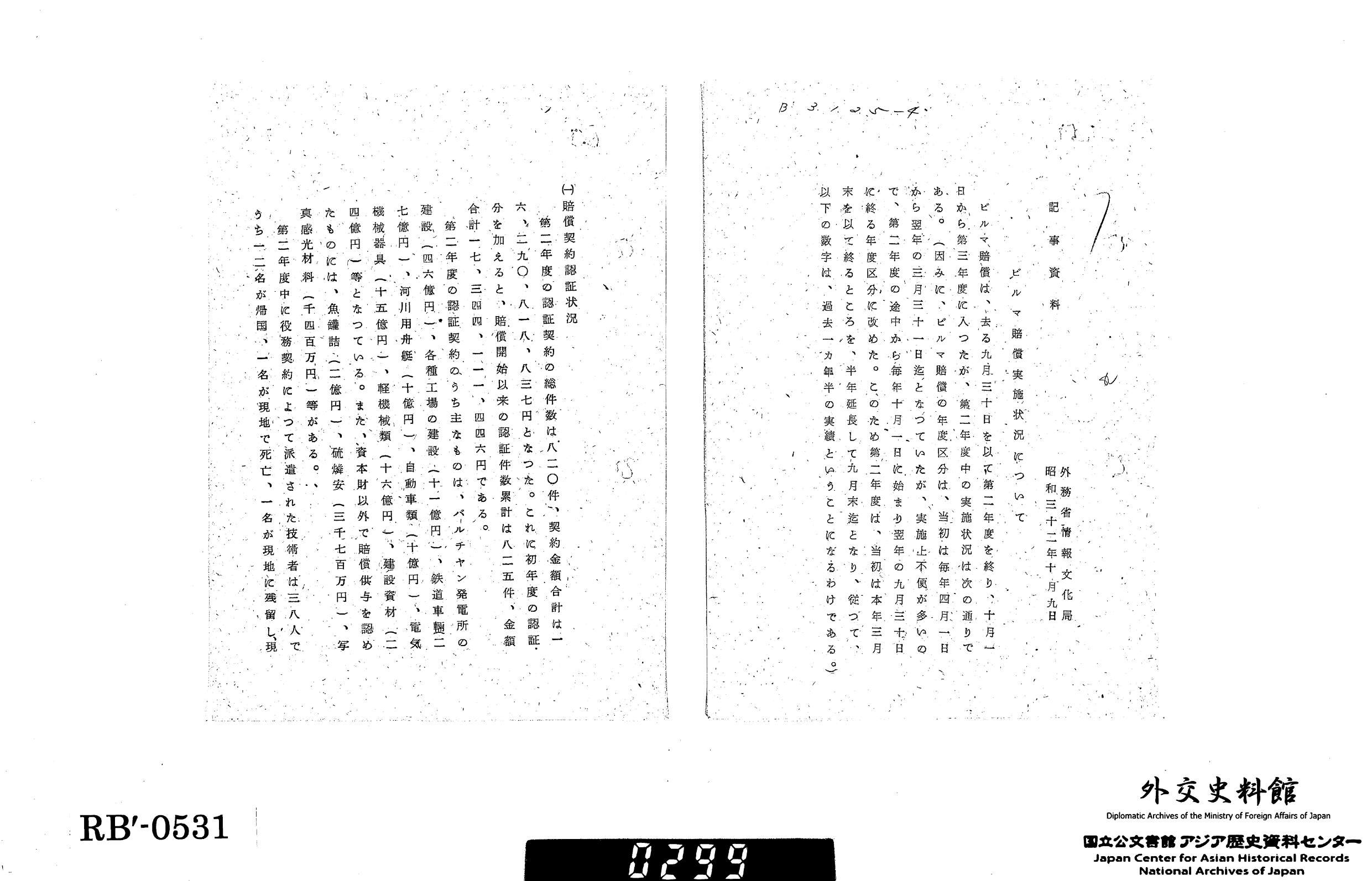
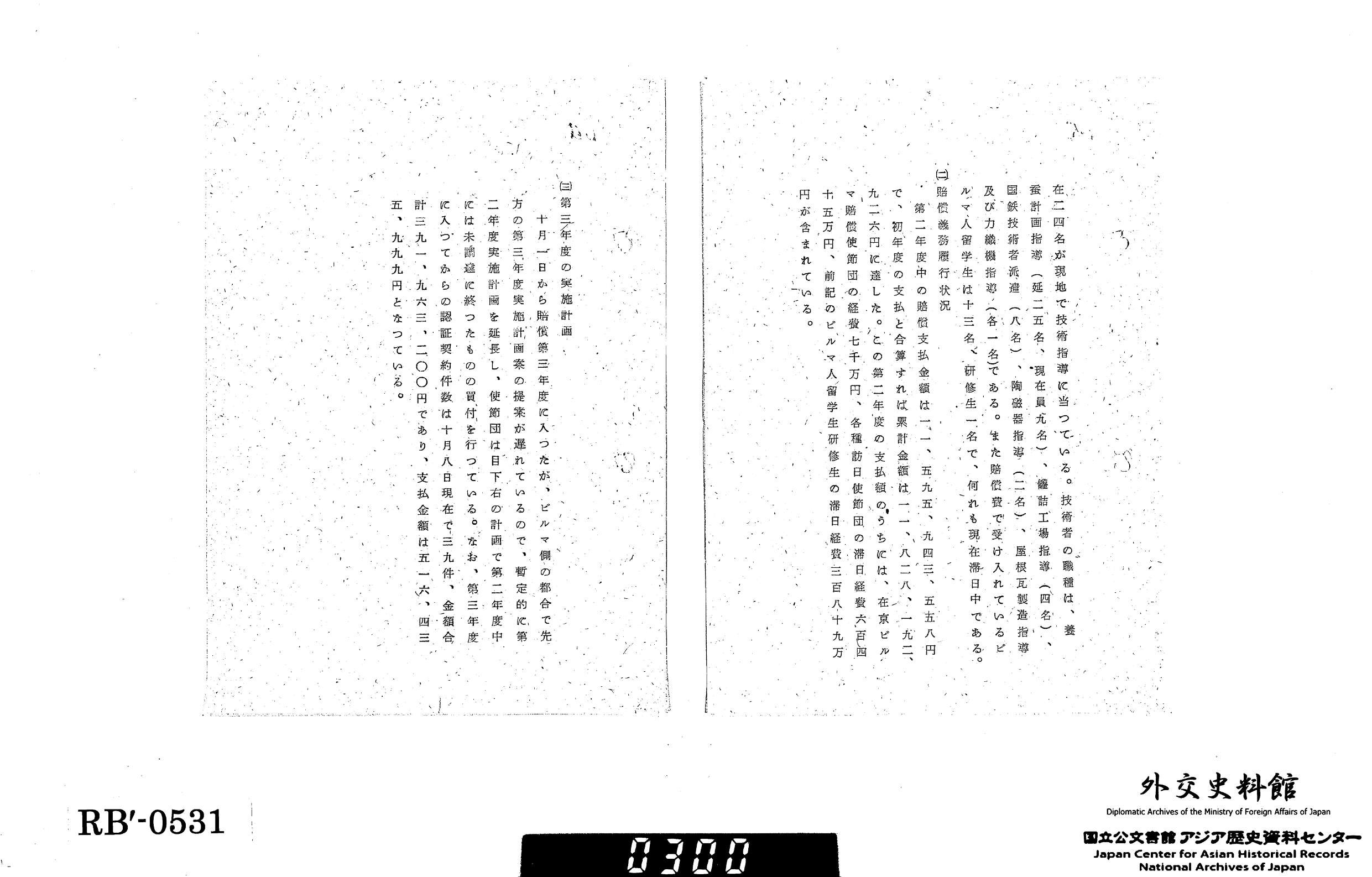
[Document 36] is a Ministry of Foreign Affairs press release summarizing the status of reparations to Burma as of October 1957. A total of 820 contracts were certified as reparations during the second fiscal year of the agreement, amounting to approximately JP¥16.29 billion. Major items included the construction of the Baluchaung power station and various factories, as well as railway vehicles, river watercraft, automobiles, electrical machinery and equipment, light machinery, and construction materials. Also included were consumer goods such as canned fish, superphosphate (fertilizer), and photographic materials.
Furthermore, 38 engineers were dispatched from Japan under service contracts during that second fiscal year. They provided guidance on sericulture projects, canning factories, engineerers for the national railroad, and ceramics. Japan also accepted 13 exchange students and one trainee from Burma, funded by reparations.
JACAR Learning: “Japan-Burma Peace Treaty”◆Status of Reparations Made to South Vietnam
[Document 37] Item: “6. Others” B24010146700 (Images 46 and 51)
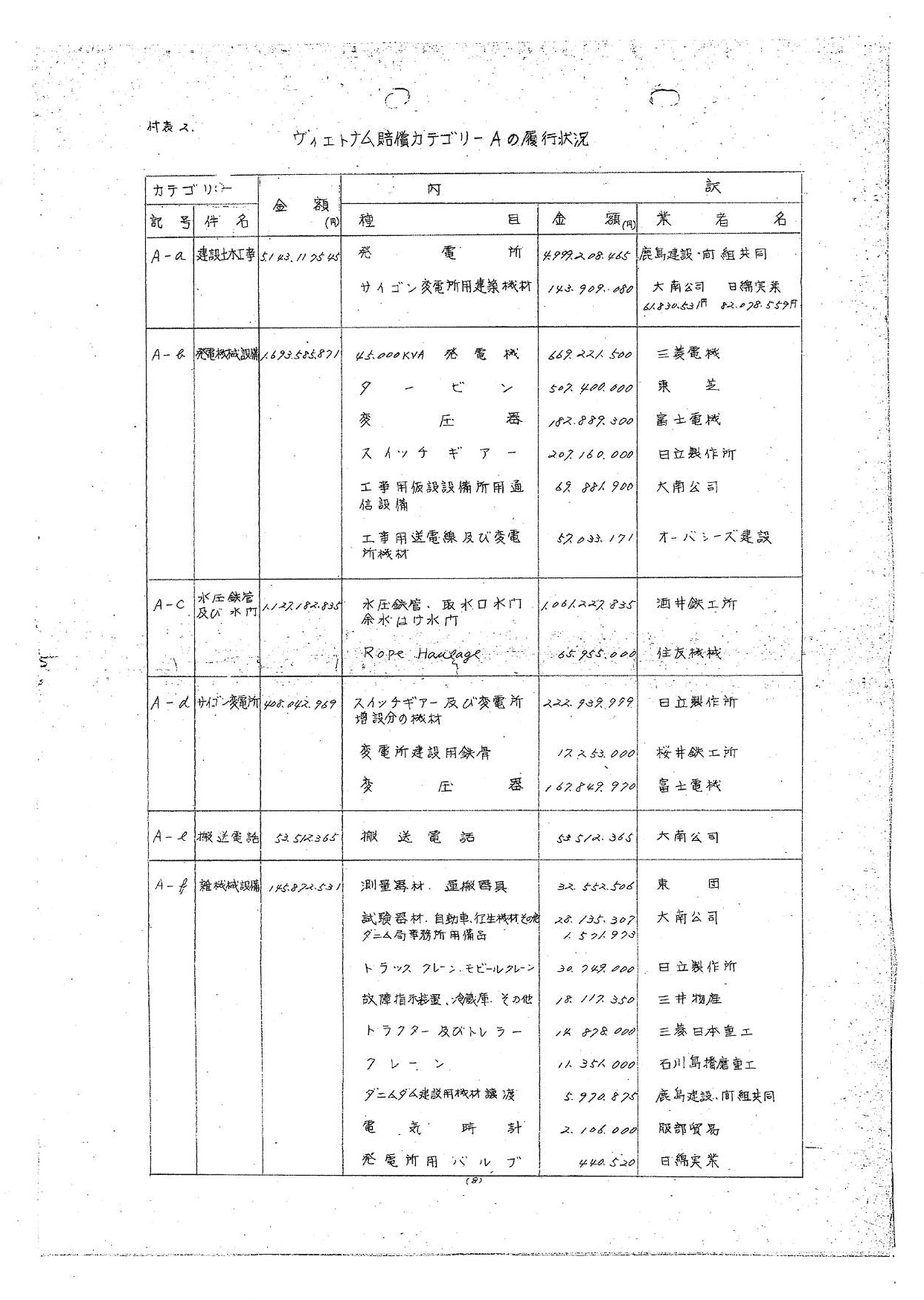
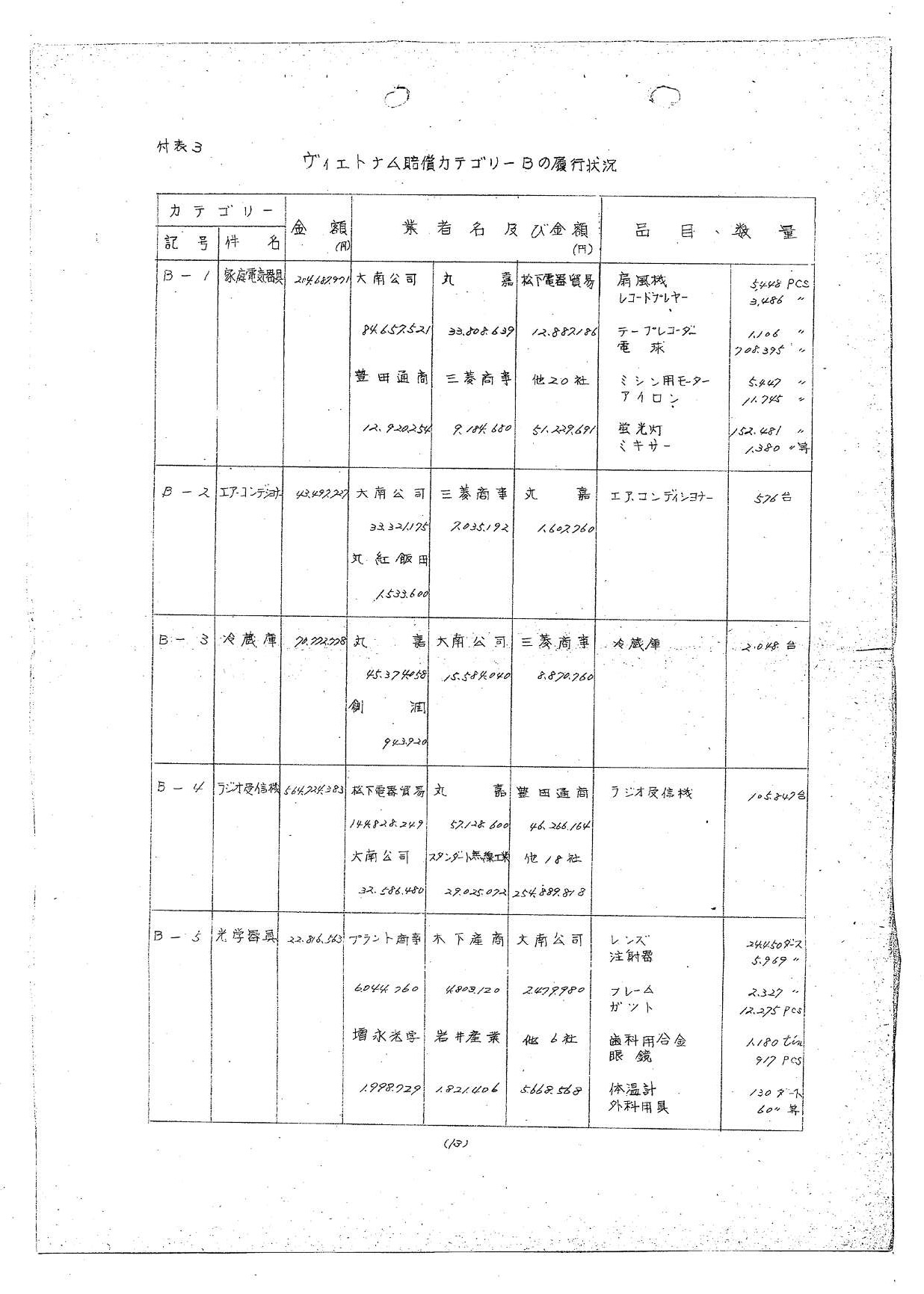
[Document 37] is a portion of a report (Images 40–62) summarizing the status of reparations made to South Vietnam as of March 1965, five years after they began. In South Vietnam, projects related to the construction of the Da Nhim power station (Category A) accounted for the majority of the reparations. Meanwhile, it can be seen that household appliances such as air conditioners and refrigerators came under consumer goods and other products (Category B). These consumer goods were also intended to serve as a means for procuring local currency for the Da Nhim Project. In sum, it appears that more than 90 percent of the reparations were related to the Da Nhim project.
In addition to the Da Nhim Project, we can also find a variety of factory construction projects, shipwreck salvage operations, irrigation projects, and bridge construction projects (Category D).
The second phase of construction at the Da Nhim hydroelectric power station was completed at the end of 1964. It has contributed to the stable supply of water and electricity for many years.
JACAR Learning: “Reparations and Loan Agreements with South Vietnam”◆Bunga Tanjong and Bunga Orkid
[Document 38] Item: “5. Shipping Establishment Plan and Ships” B24010158500 (Images 80, 84, 86, and 90)
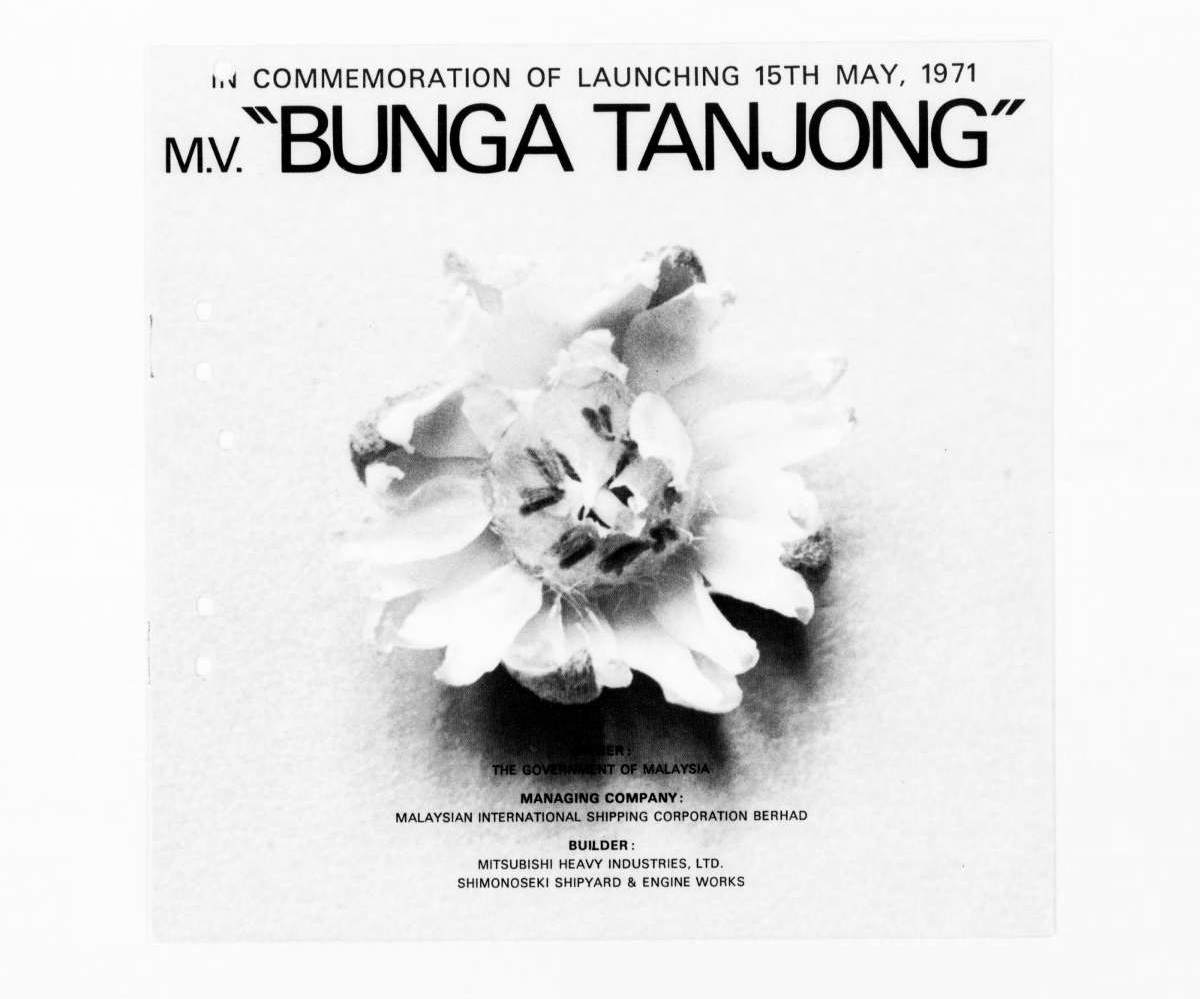
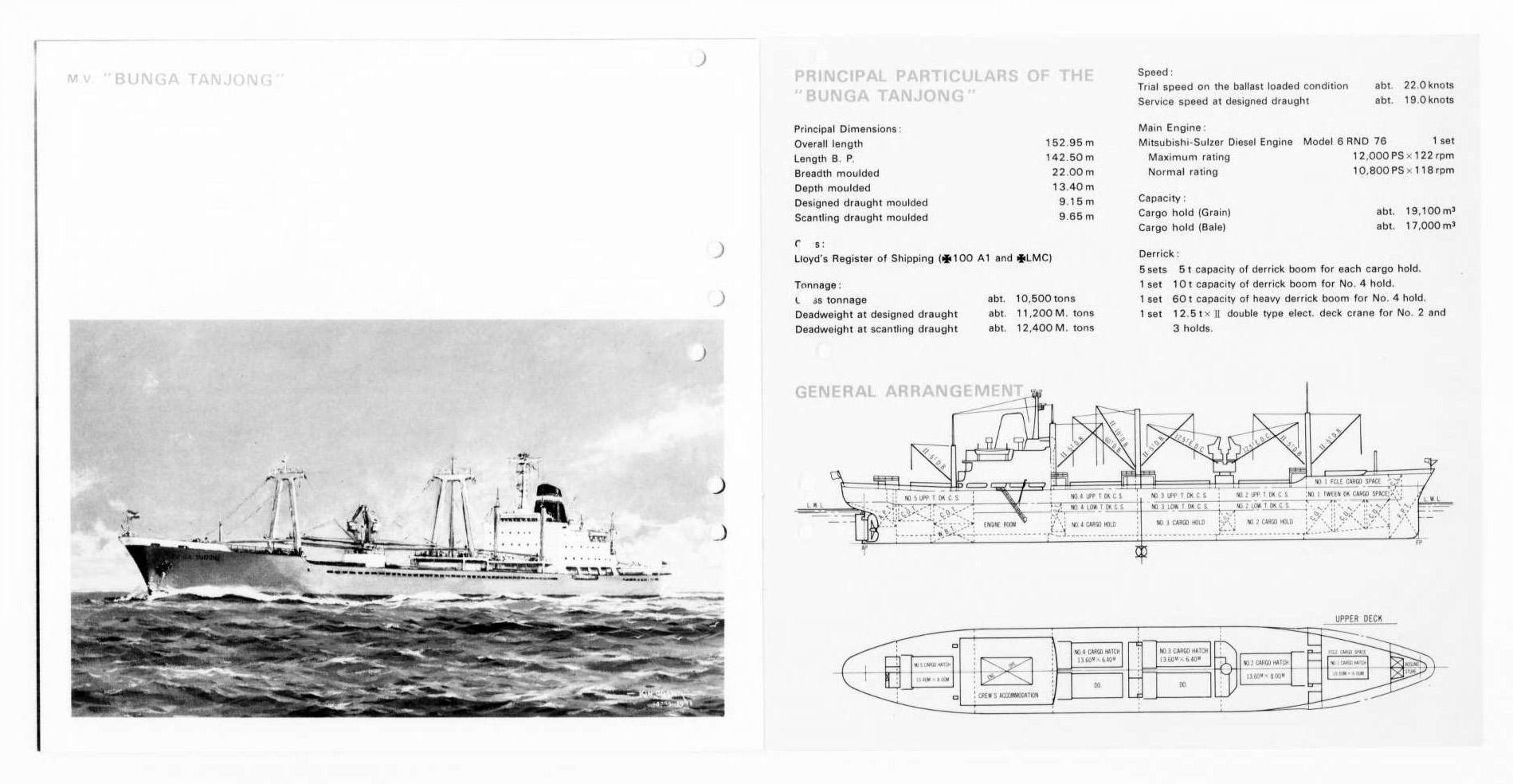
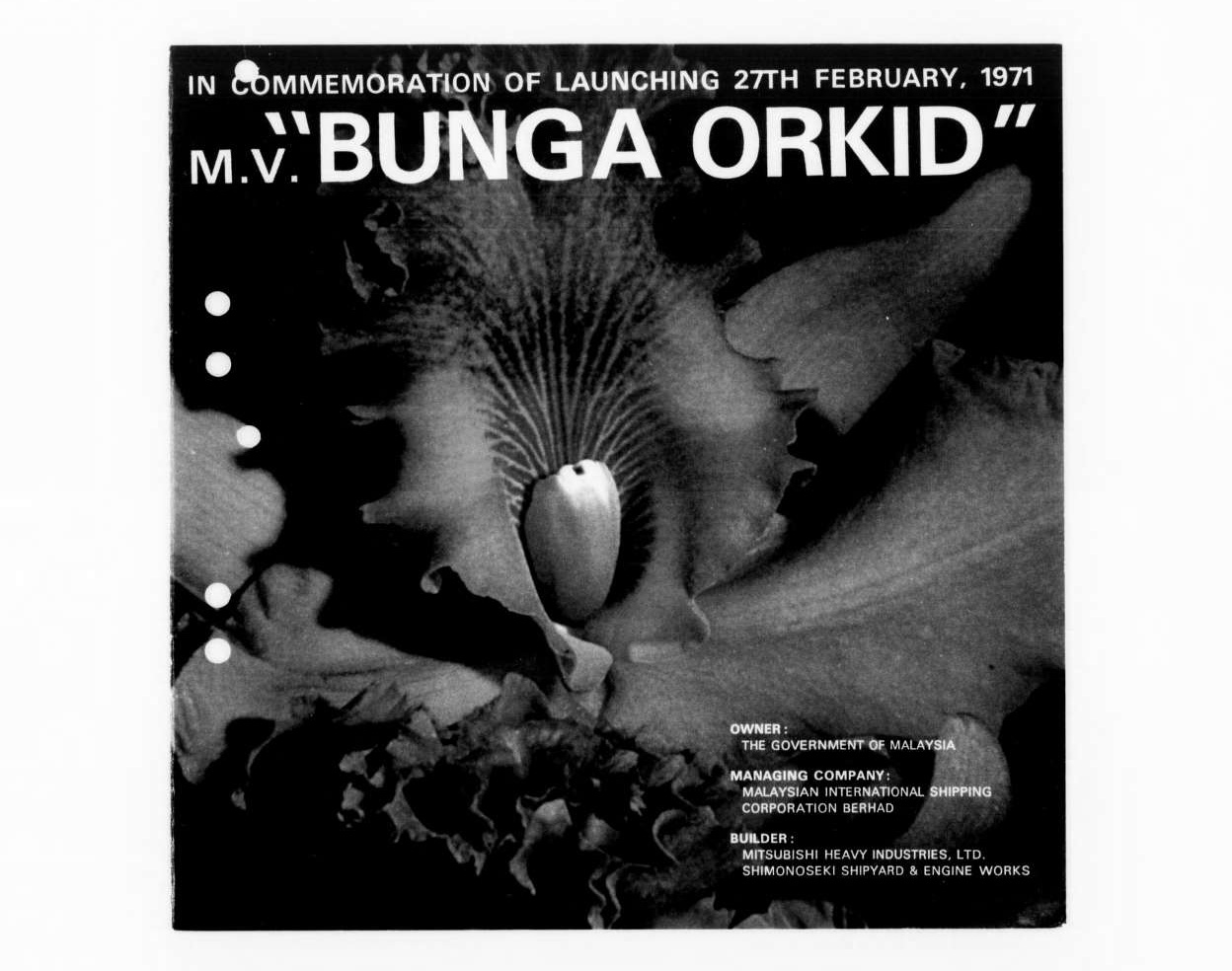
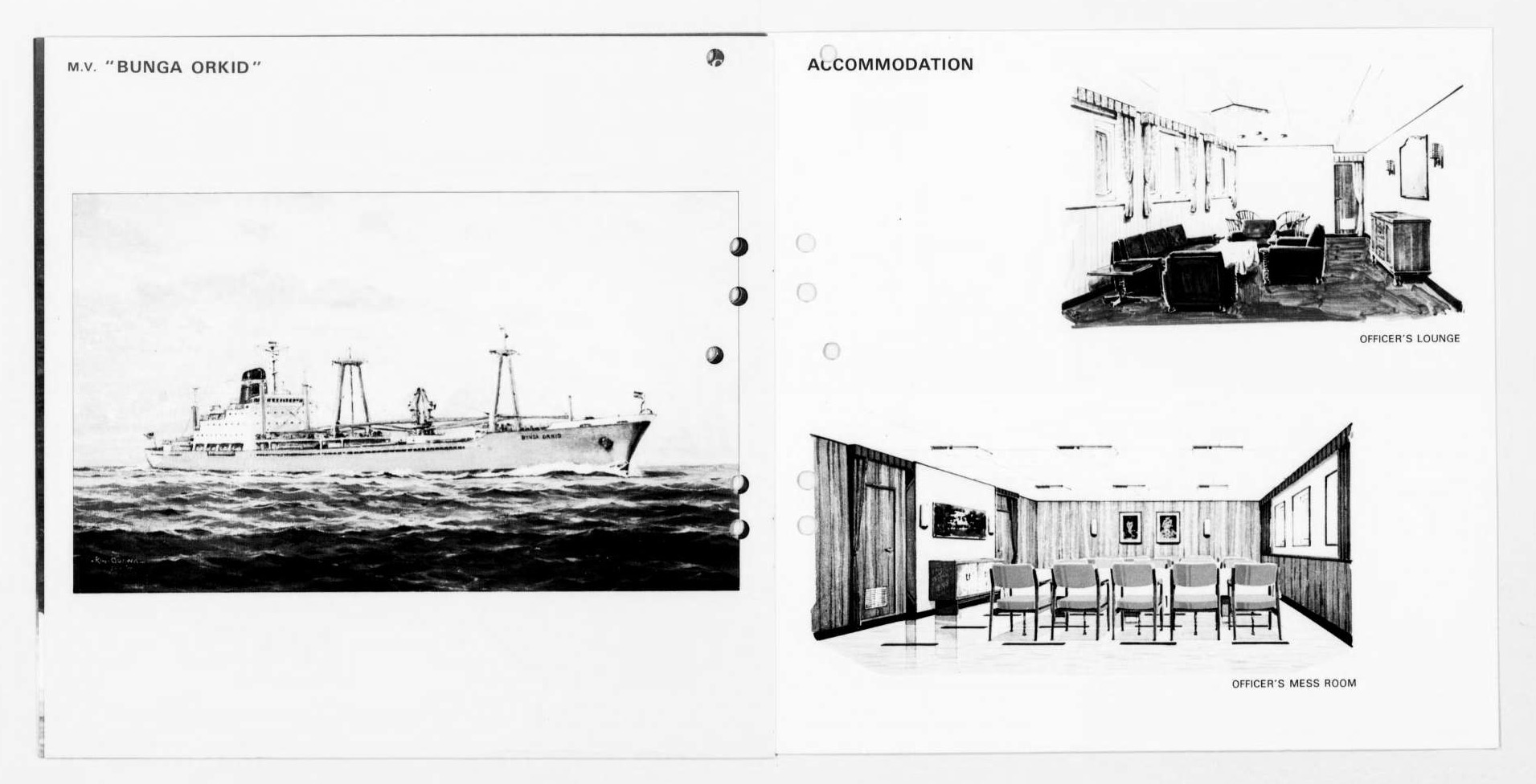
The Malaysian government hoped to be provided cargo ships funded by Japanese ; on that basis, it formulated a plan to establish a state-owned shipping company. It was anticipated that the cargo ships would transport tin and rubber to European countries.
In response, two new ocean-going cargo ships were built in Japan and donated in 1971. [Document 38] is a commemorative booklet marking their launch. The ships were named Bunga Tanjong and Bunga Orkid, after Malaysian flowers.
