4. Mutual Visits of Leaders and Heads of State
After the war, as Japan and various Asian nations were concluding peace treaties and establishing close relations, the leaders of these countries began to exchange mutual visits.
During their visits to Asia, Japanese leaders also engaged in negotiations regarding peace treaties, reparations agreements, and economic cooperation. Materials regarding these visits are included in the series “Section 5: Visits to Foreign Nations by Prominent Japanese,” among others.
Regarding visits to Japan by leaders of Asian nations, in addition to the series “Section 6: Visits to Japan by Foreign Heads of State and Prominent Persons,” photographs taken during their visits can be viewed in the series, “Category 5: Photo Albums.”
◆Prime Minister Kishi Nobusuke’s Visit to Asian Nations
[Document 29] Item: “7. Report Status of Local Newspapers for Prime Minister Kishi's Visiting Cambodia (Embassy in Cambodia): Reported by Yoshioka, Ambassador to Cambodia, No. 433, Dated December 6, 1957” B21010046800 (Image 13)
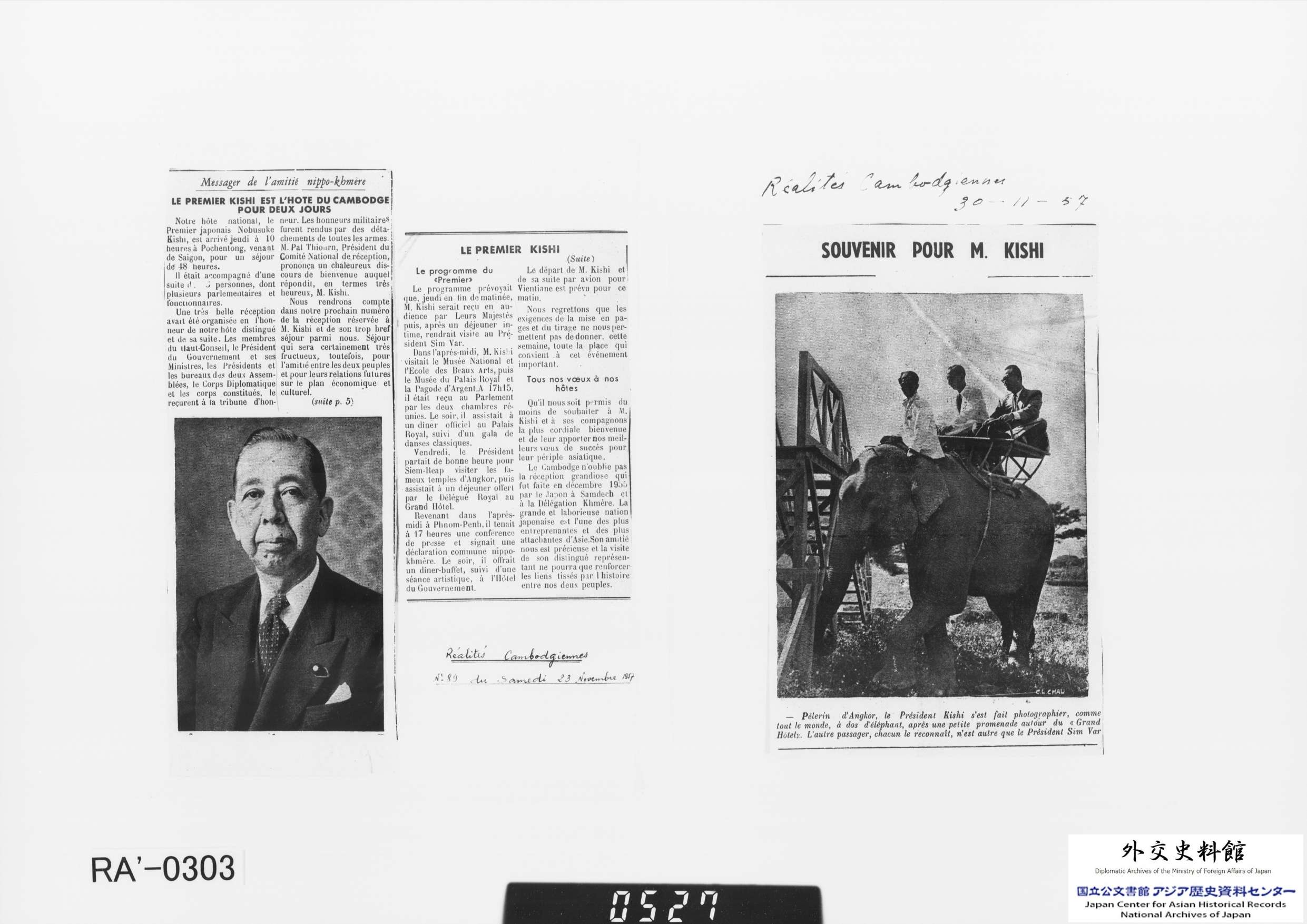
In 1957, Prime Minister Kishi Nobusuke became the first postwar Japanese prime minister to tour various Asian countries. [Document 29] is one of the reports on local newspaper coverage provided by the Embassy of Japan in Cambodia. It includes a photograph of Kishi riding an elephant alongside the Cambodian prime minister.
Prime Minister Kishi’s visit to Asian and Pacific nations in 1957 was spread out over two separate trips: in May, he visited six countries—Burma, India, Pakistan, Ceylon, Thailand, and the ROC. From November through December, he visited nine countries: South Vietnam, Cambodia, Laos, Malaya, Singapore, Indonesia, Australia, New Zealand, and the Philippines. During this period, he engaged in reparations negotiations in South Vietnam, and in Indonesia, a reparations agreement was concluded with President Sukarno. Furthermore, on the occasion of his visit to Cambodia an exchange of notes regarding economic and technical cooperation was signed with that country in November.
◆Indian Prime Minister’s Visit to Japan
[Document 30] Item: “Commemorative Photo Album of the Guest of the State Visiting to Japan/Nehru, Prime Minister of India Vol. 1” B21010377900 (Images 22 and 29)
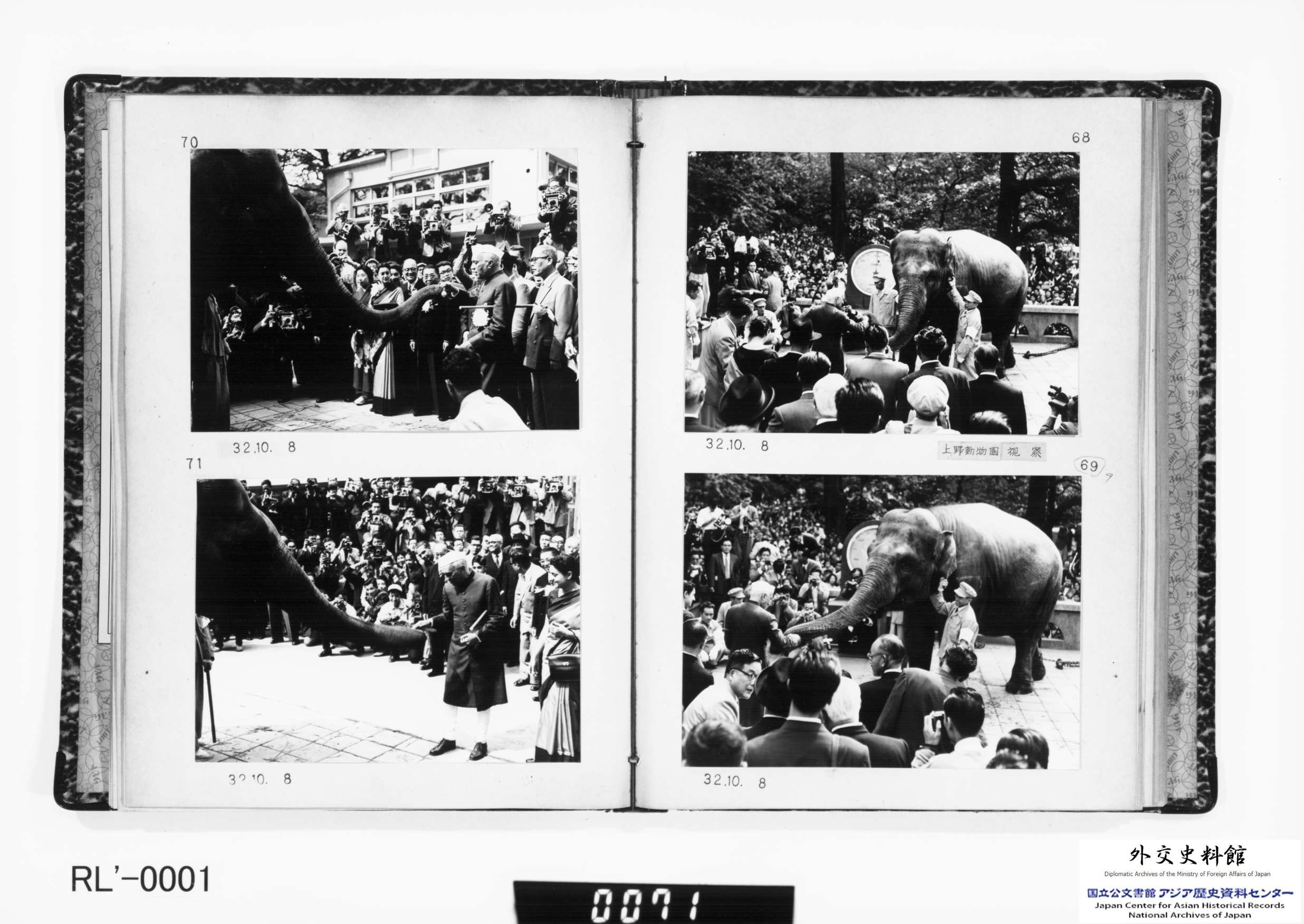
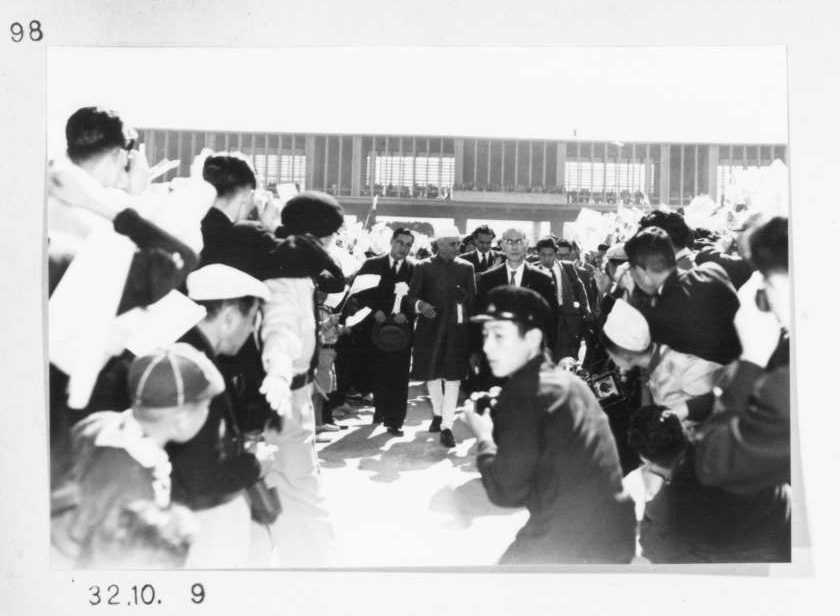
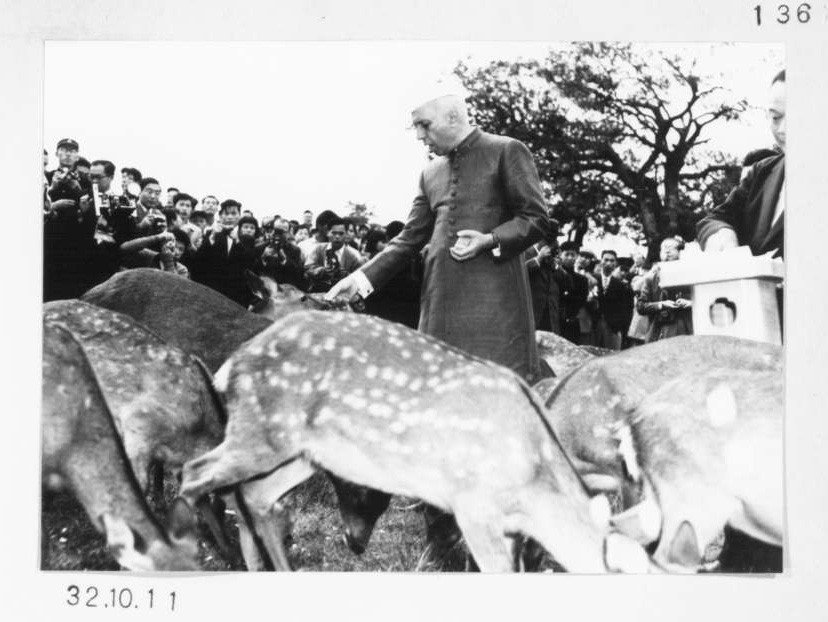
[Document 31] Item: “Commemorative Photo Album of the Guest of the State Visiting to Japan/Nehru, Prime Minister of India Vol. 2” B21010378100 (Image 7)
It is well known that elephants at Ueno Zoo in Tokyo were culled during the war. In response to the requests of Japanese children who wanted to see an elephant, in 1949 Indian Prime Minister Jawaharlal Nehru gifted the zoo a pachyderm named “Indira” after his beloved daughter. It became widely held dear. On his 1957 visit to Japan, Nehru visited Ueno Zoo and met his daughter’s namesake.
Nehru also visited the Peace Memorial Museum and the Atomic Bomb Survivors’ Hospital in Hiroshima; the Great Buddha at the temple Tōdai-ji in Nara; the Imperial Palace, Shūgakuin Imperial Villa, and the rural town of Makishima-chō in and around Kyoto; and factories such as those of Mitsubishi Shipbuilding and Sumitomo Metal Industries.
◆Visit to Japan by the President of the Philippines and Address to the House of Councillors
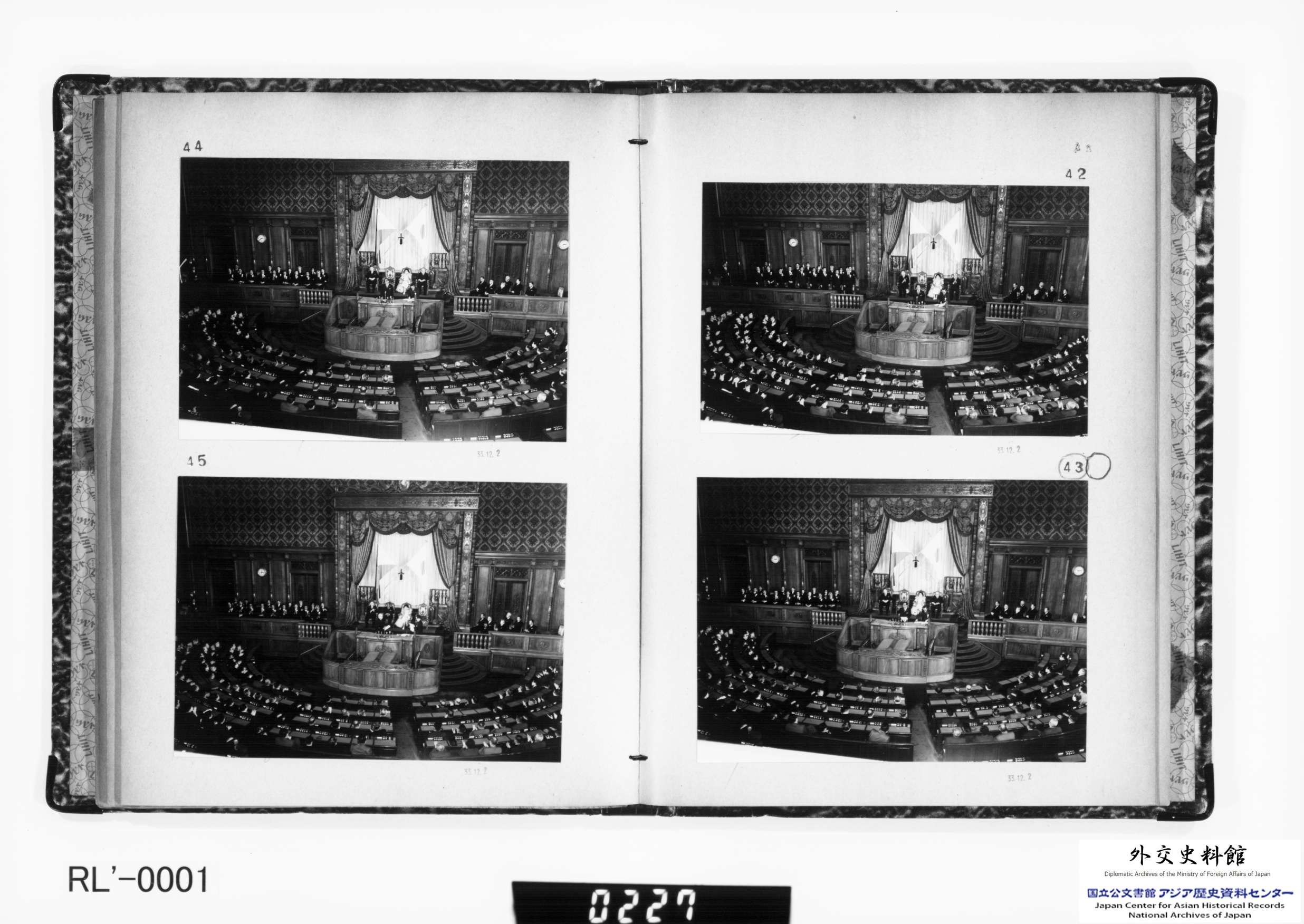
[Document 32] Item: “Commemorative Photo Album of the Guest of the State Visiting to Japan/Carlos P. Garcia, President of the Philippines Vol. 1” B21010379100 (Image 13)
[Document 33] Item: “7. Matters related to Visit to the Diet” B20010032400 (Images 13-15)
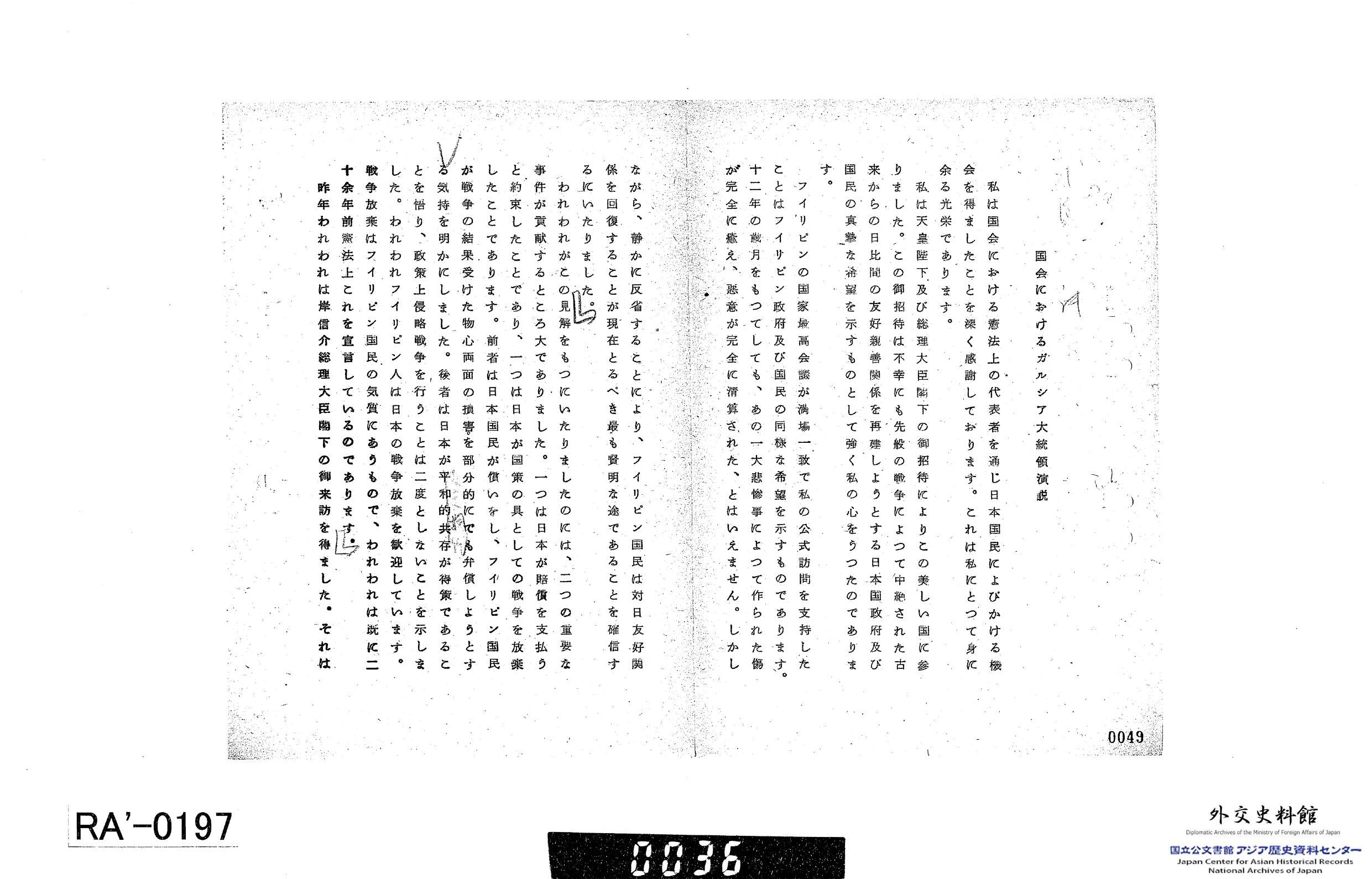
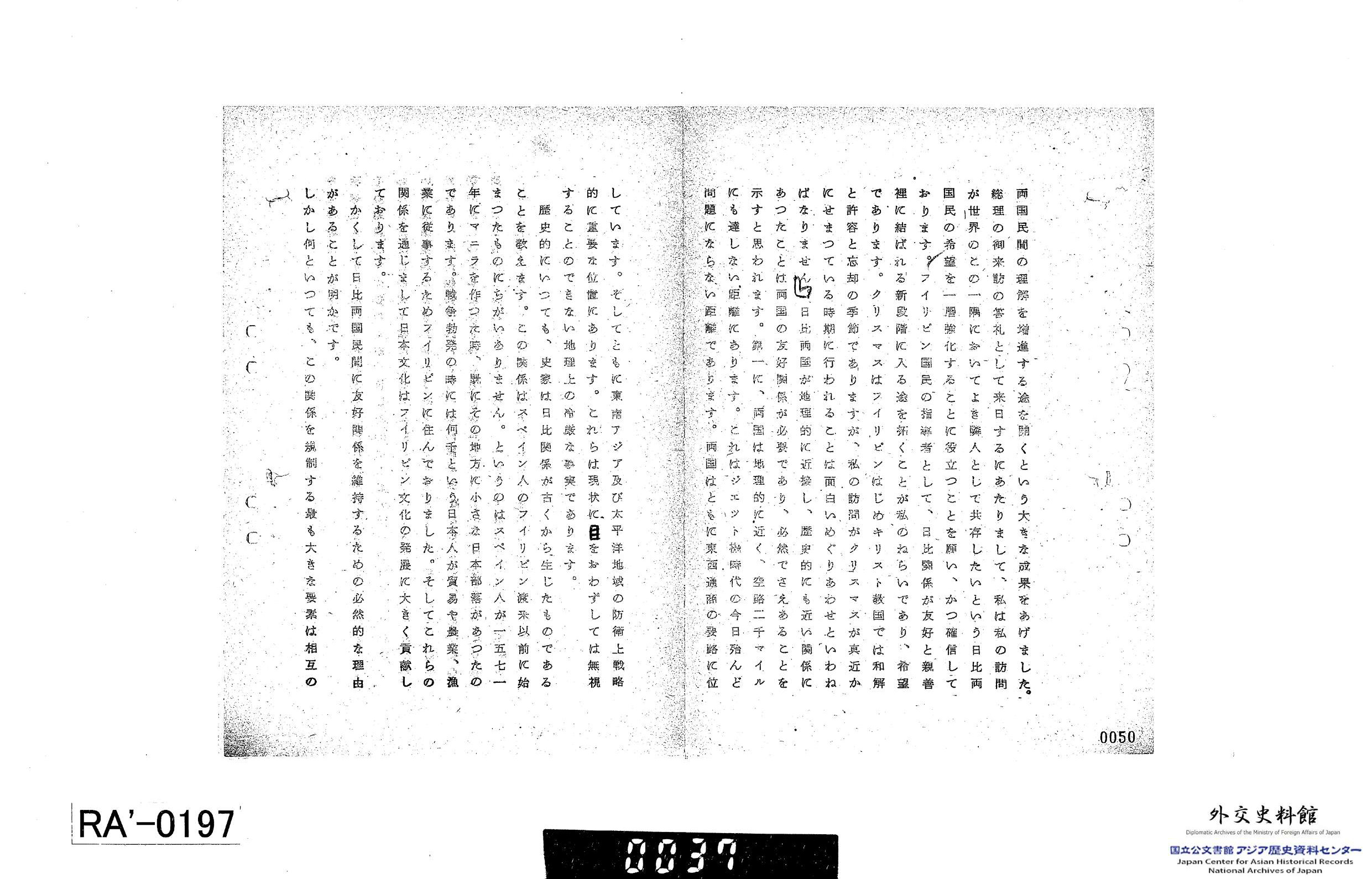
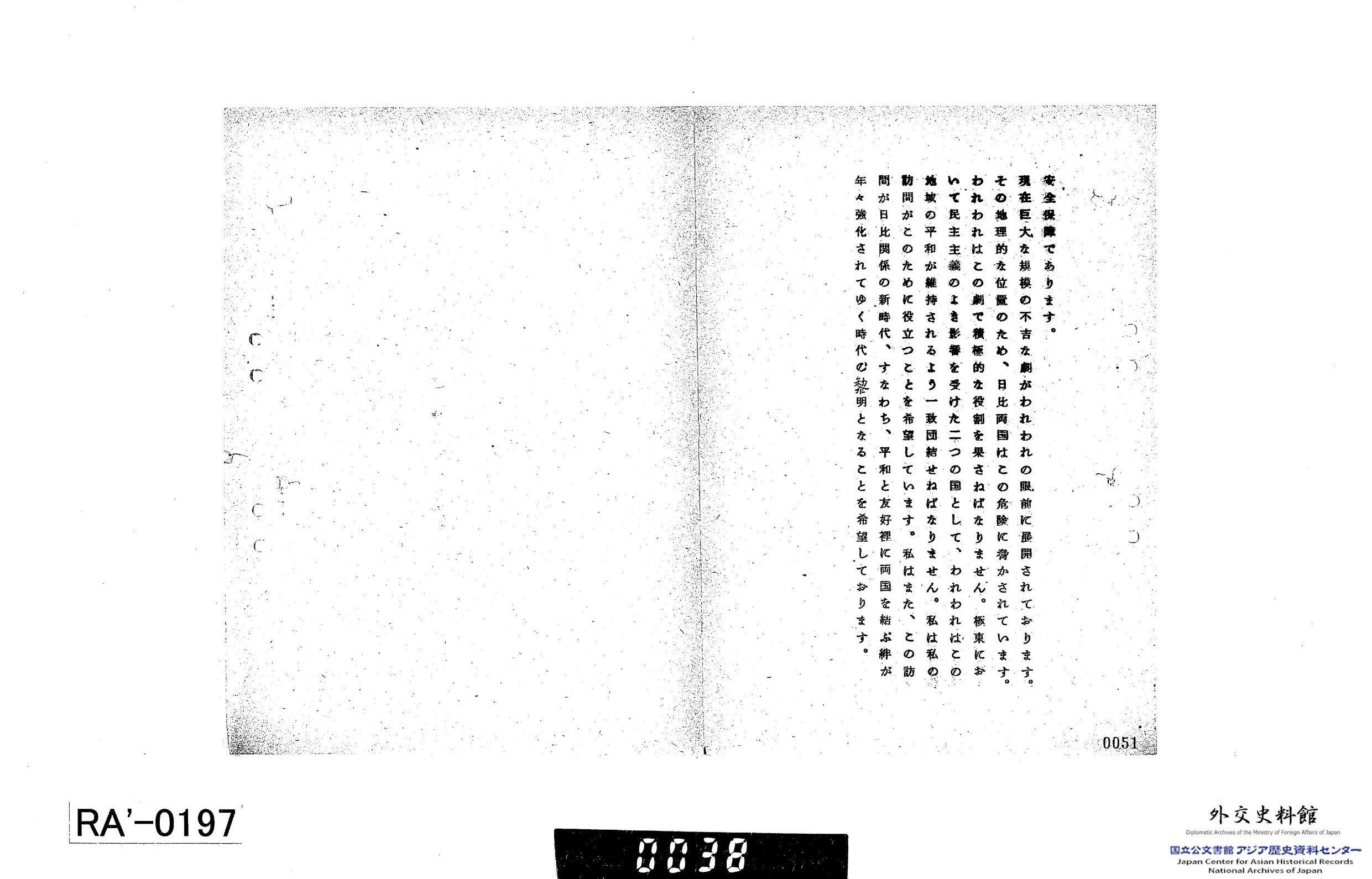
During his 1958 visit to Japan, in a welcome reception hosted by the speakers of both houses of the Japanese parliament Philippine President Carlos P. Garcia became the first foreign head of state to deliver a speech in the Chamber of the House of Councillors. [Document 32] is an album containing photographs from that occasion. [Document 33] is the draft English text of Garcia’s speech. In that address, Garcia commended Japan for promising to pay reparations and renouncing war as an instrument of national policy, and expressed his hope for the renewal of friendly relations. He added that friendly relations were logical from the perspectives of both the geographical proximity of Japan and the Philiippines and their long-standing historical ties, as well as that of national security.
◆Prime Minister Ikeda Hayato’s Visit to Asia
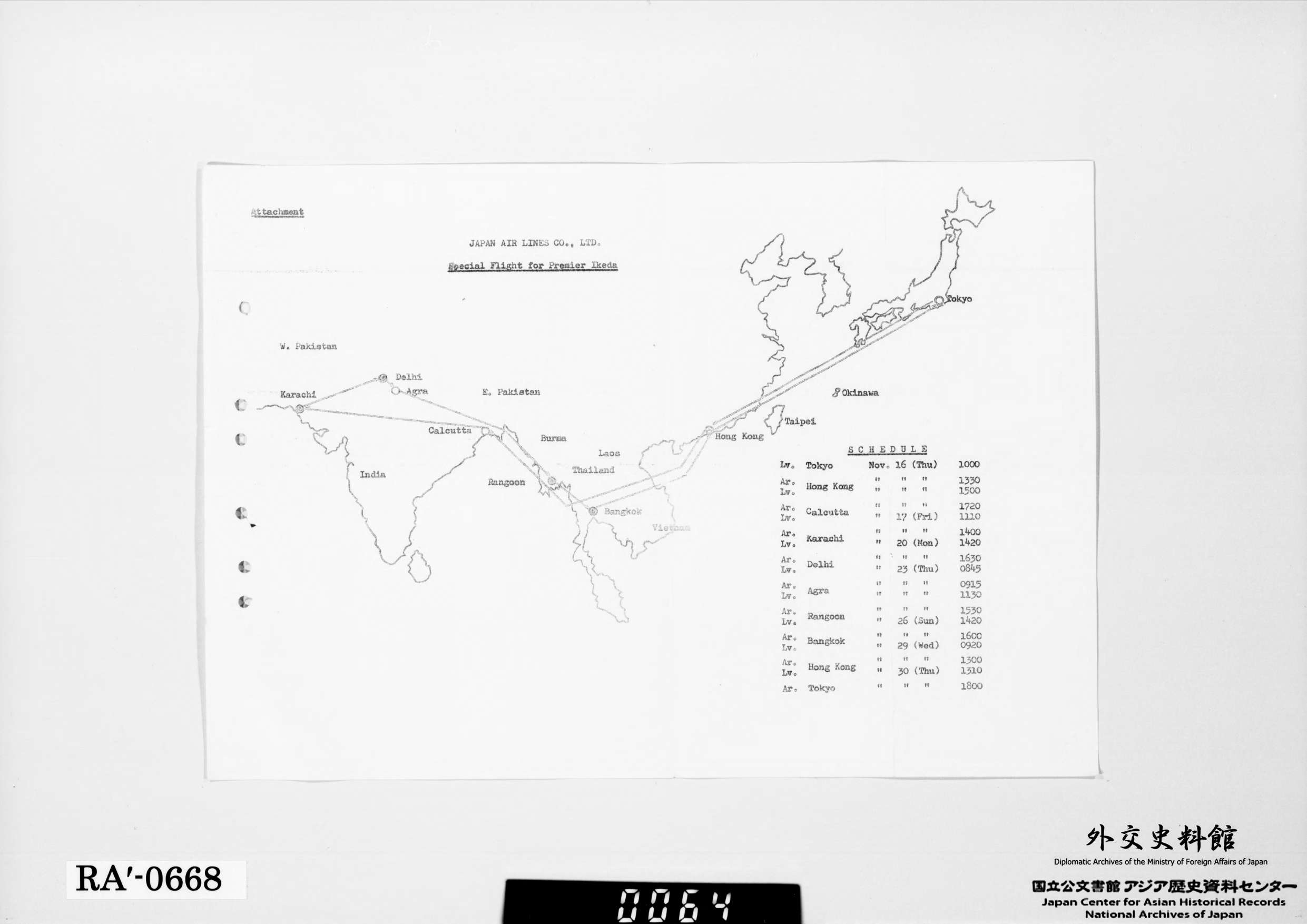
[Document 34] Item: “(1) General” B24010013800 (Image 57)
[Document 35] Item: “(1) India: 6) Materials to Be Prepared on Site” B24010019400 (Image 9)
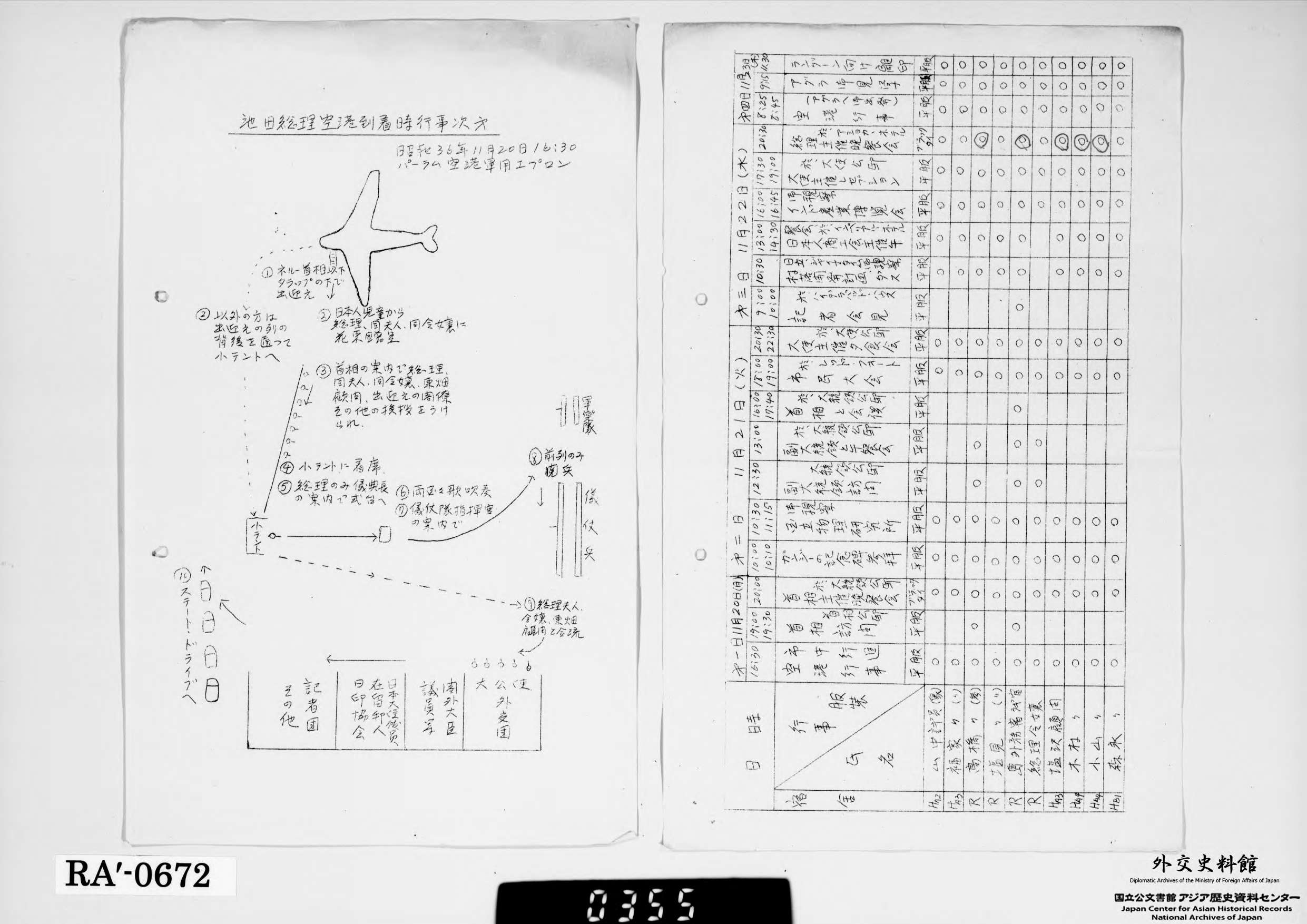
In November 1961, Prime Minister Ikeda Hayato visited four countries: Pakistan, India, Burma, and Thailand. In Thailand, following a summit meeting, an agreement was reached regarding the so-called “Special Yen” issue. [Document 34] shows the itinerary for the Thailand visit, while [Document 35] shows the program for the ceremony upon arrival at the airport in India.
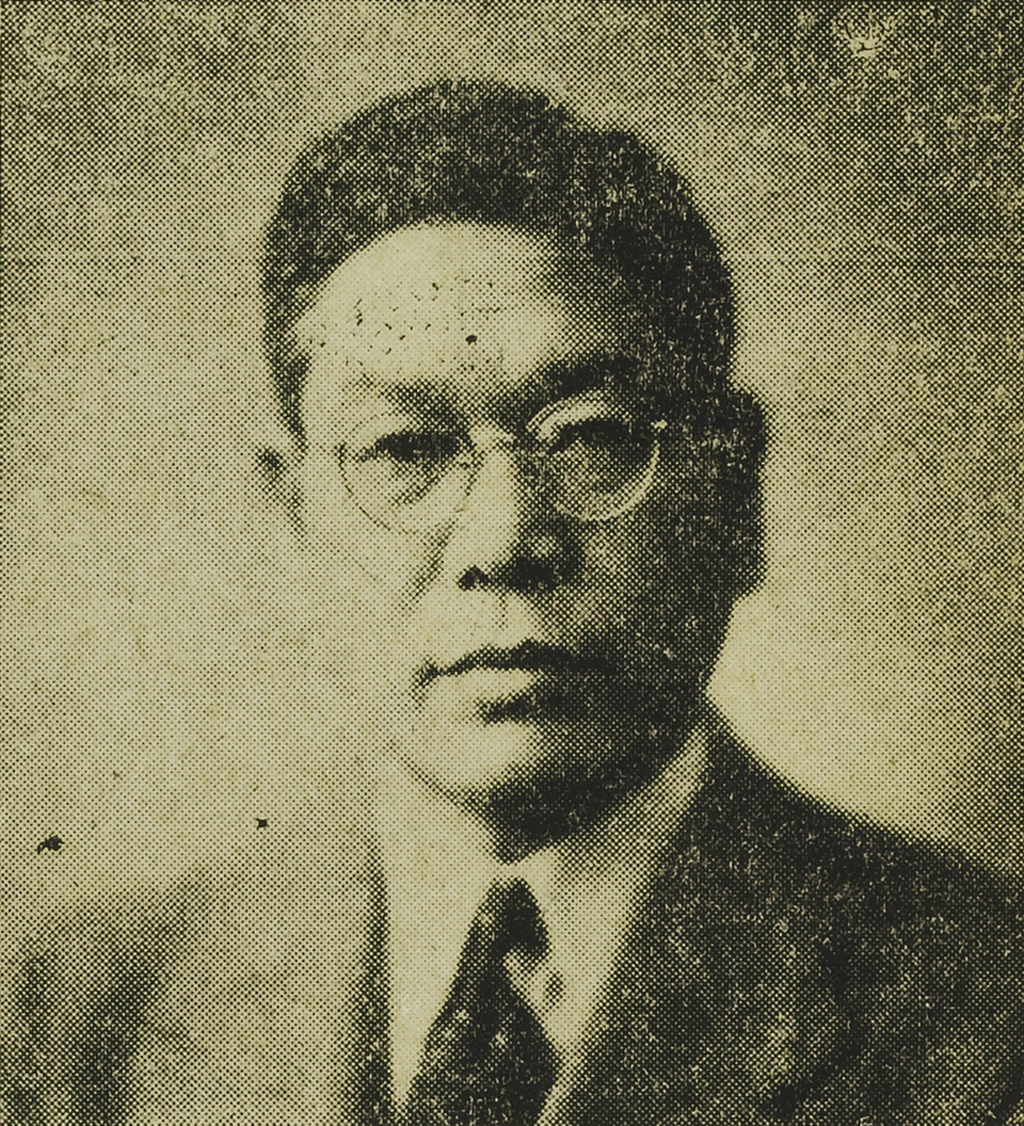
(Reference: Ikeda Hayato (from the National Diet Library’s “Portraits of Modern Japanese Historical Figures”))
