1. Examining the War and the Peace Treaty
After having accepted the Potsdam Declaration and signed the Instrument of Surrender, Japan came under the occupation of the Allied Forces. The declaration also noted that “stern justice shall be meted out to all war criminals.” The International Military Tribunal for the Far East was convened in occupied Tokyo, and war crimes trials were held throughout Asia.
Meanwhile, attempts to examine the war were also underway within the Japanese government. One such effort was the Sensō Chōsakai (War Investigation Commission) established by the Cabinet. Furthermore, the Ministry of Foreign Affairs (MOFA) compiled a report titled “Nihon gaikō no kago” (“Japanese diplomacy’s mistakes”).
In September 1951, the Treaty of San Francisco (formally, the Treaty of Peace with Japan) was signed. It entered into force in April 1952, and Japan regained its sovereignty. The treaty included provisions regarding the end of the war, war crimes trials, reparations, and the end of the occupation; it marked a major step forward in the postwar settlement process.
◆Records of the International Military Tribunal for the Far East
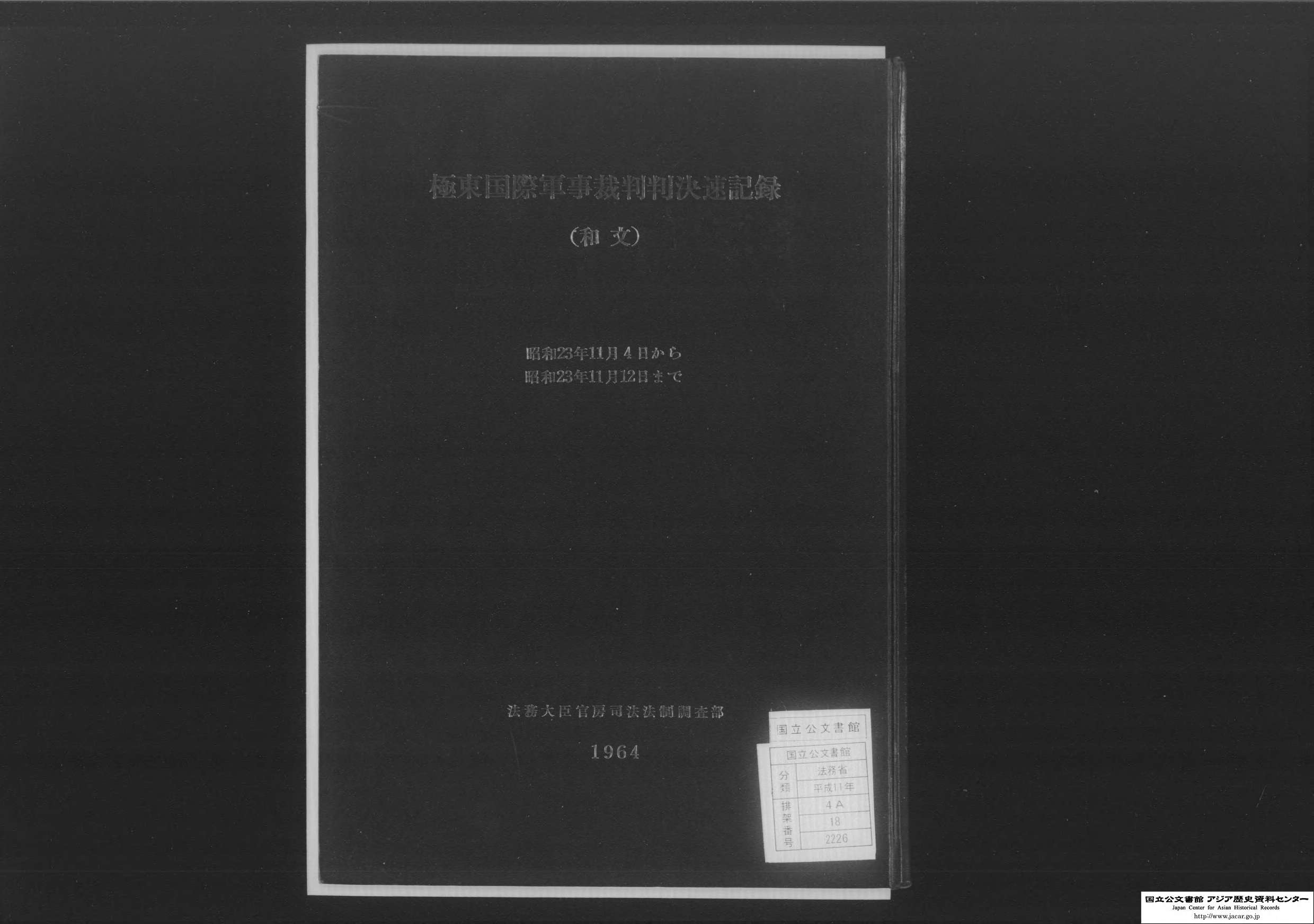
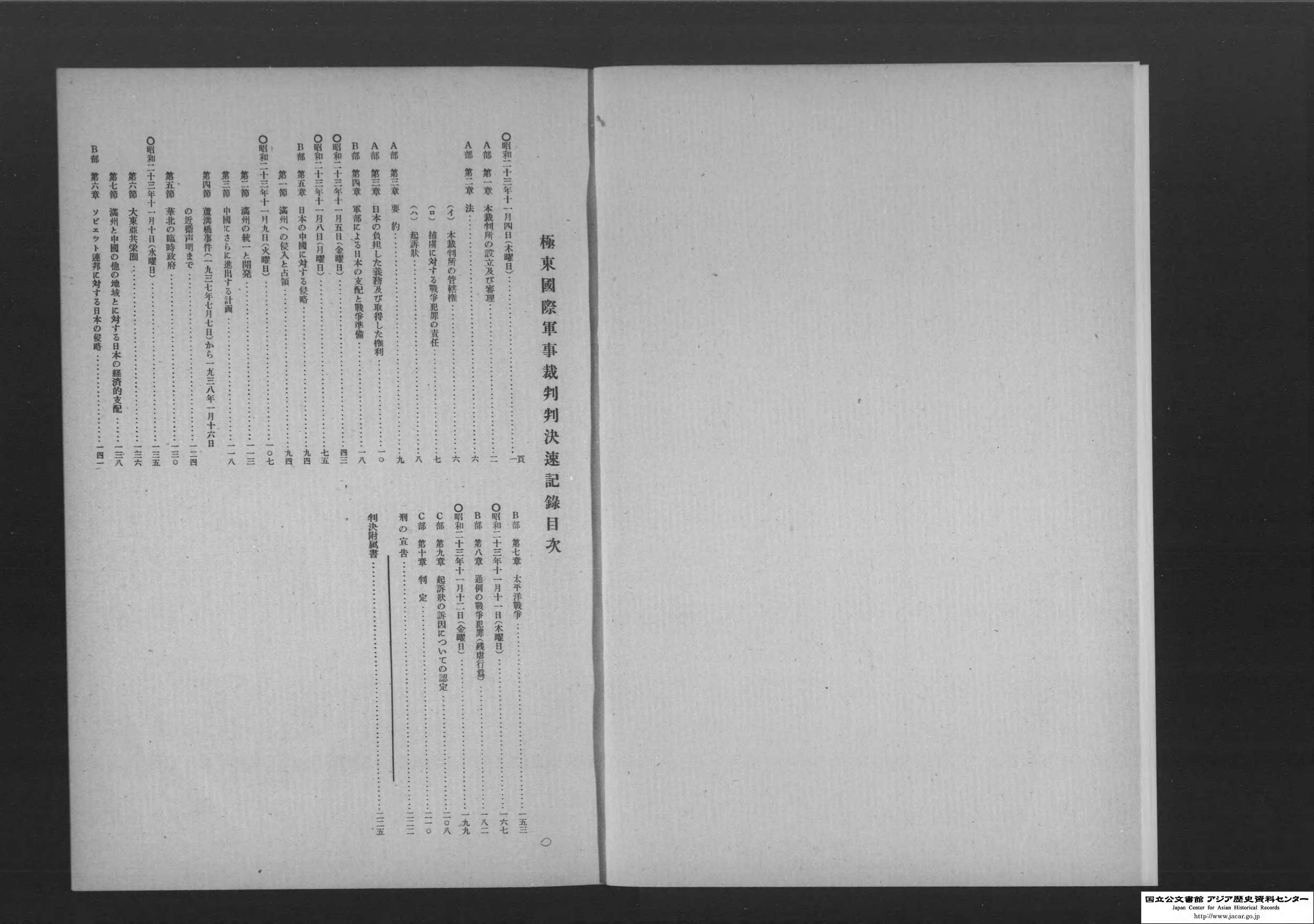
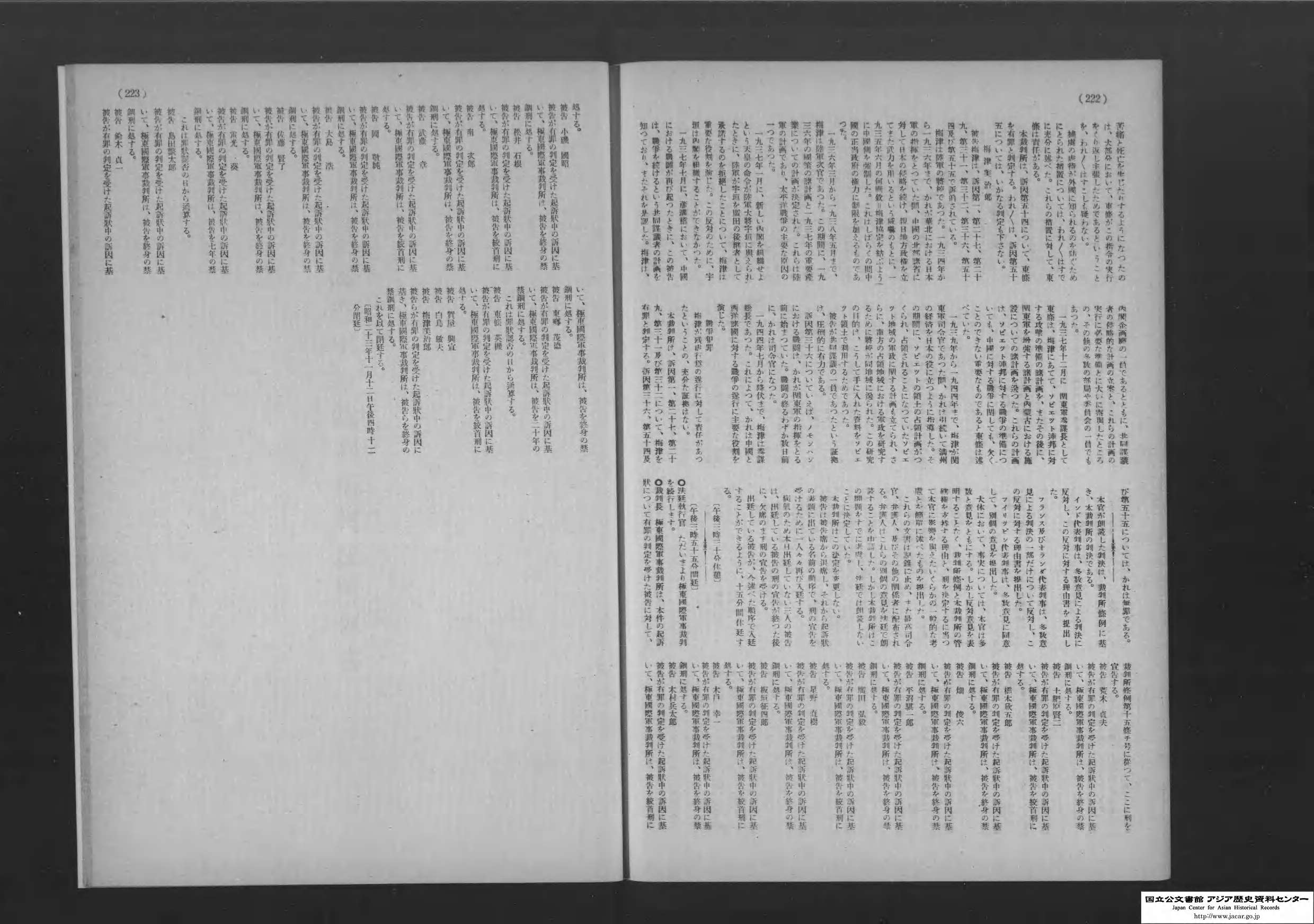
[Document 1] Item: “Transcripts of Court Proceedings of International Military Tribunal for the Far East on Class A War Crimes (Japanese), November 4 to 12, 1948 (Judgment)” A08071311400 (Images 2, 6, 118)
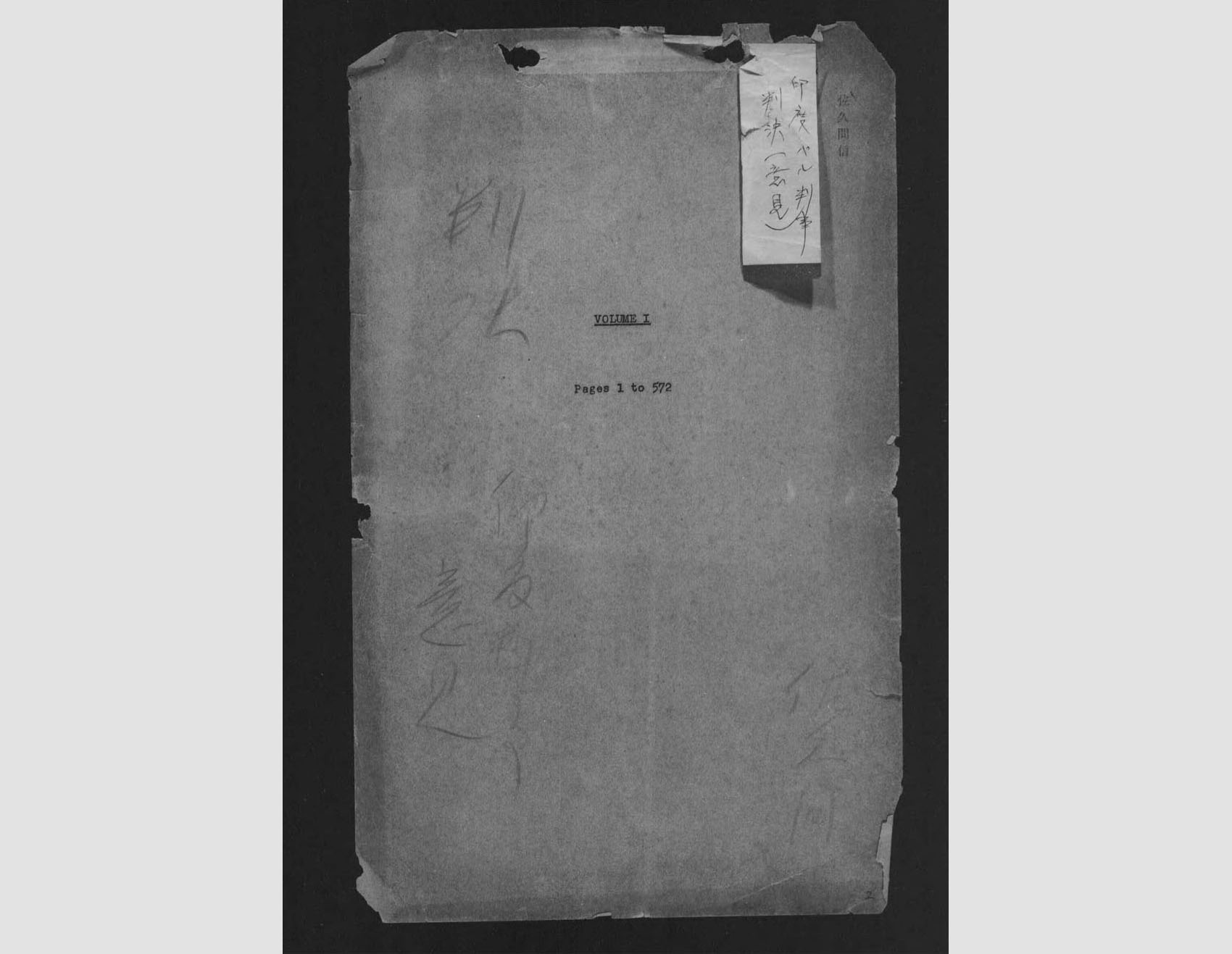
[Document 2] Item: “Record of International Military Tribunal for the Far East on Class A War Crimes (Japanese) (No. 166)” A08071308200 (Images 2, 12)
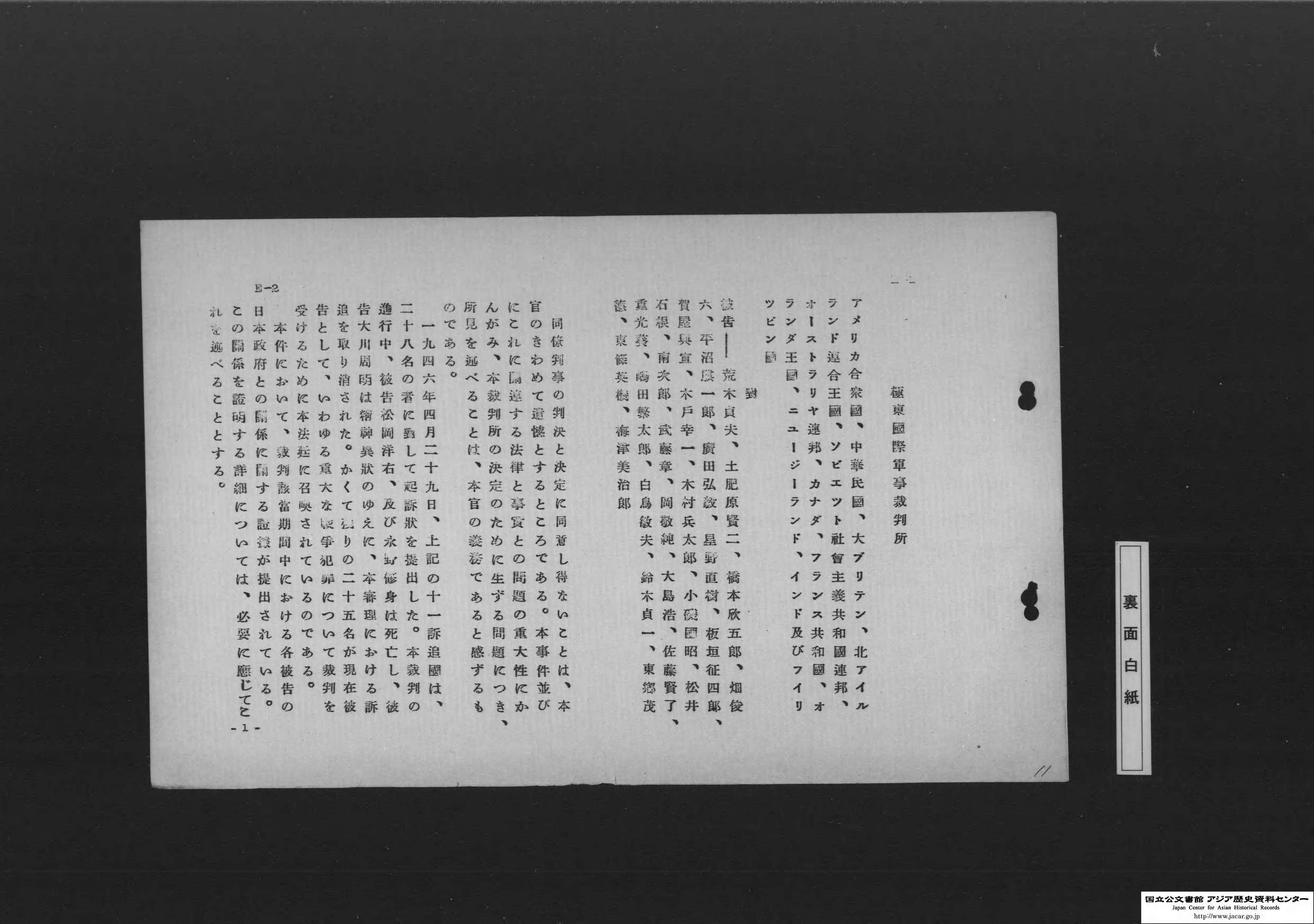
[Document 3] Item: “Record of International Military Tribunal for the Far East on Class A War Crimes (Japanese) (No. 171)” A08071309200 (Images 2, 290, 310, 347)
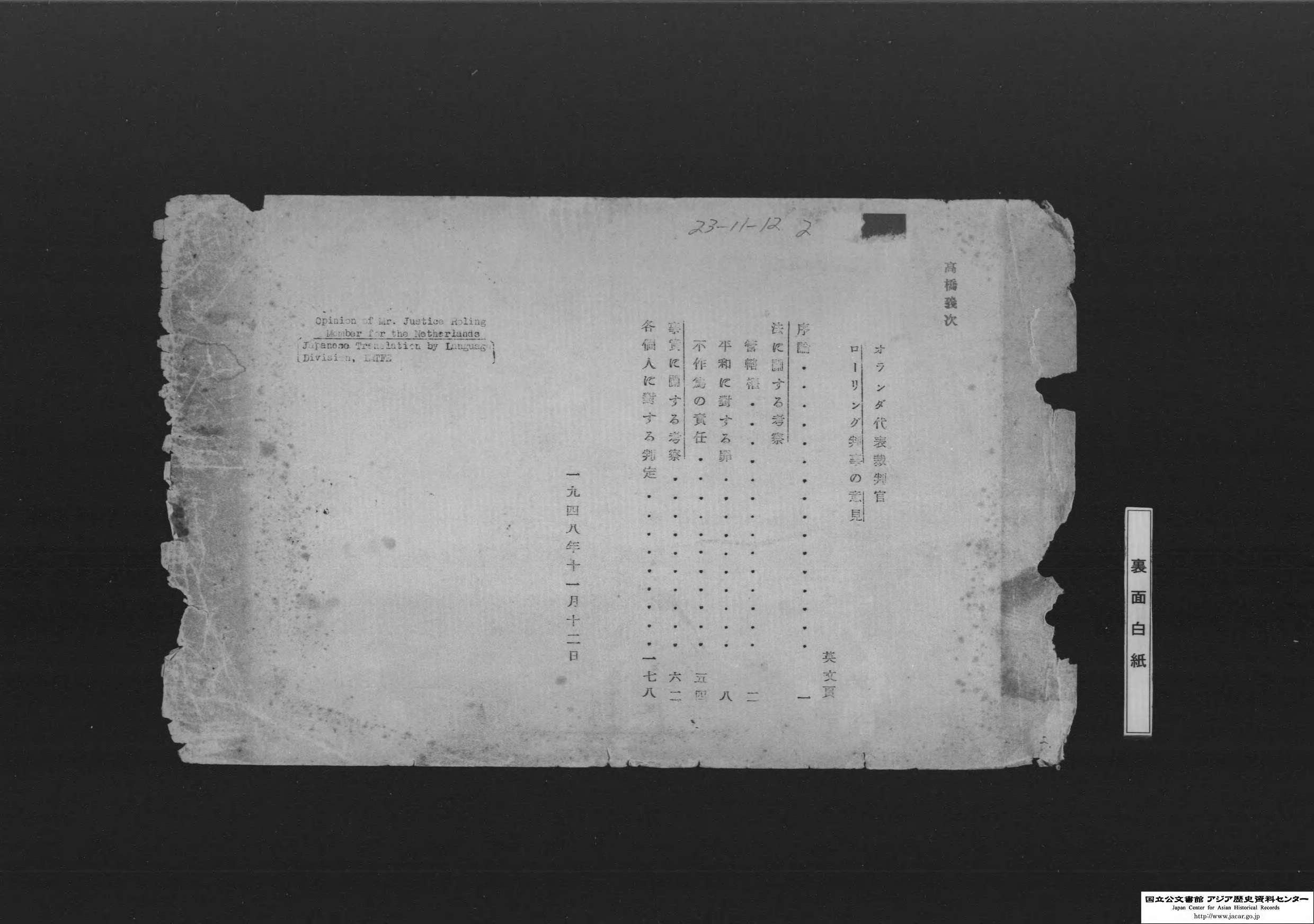
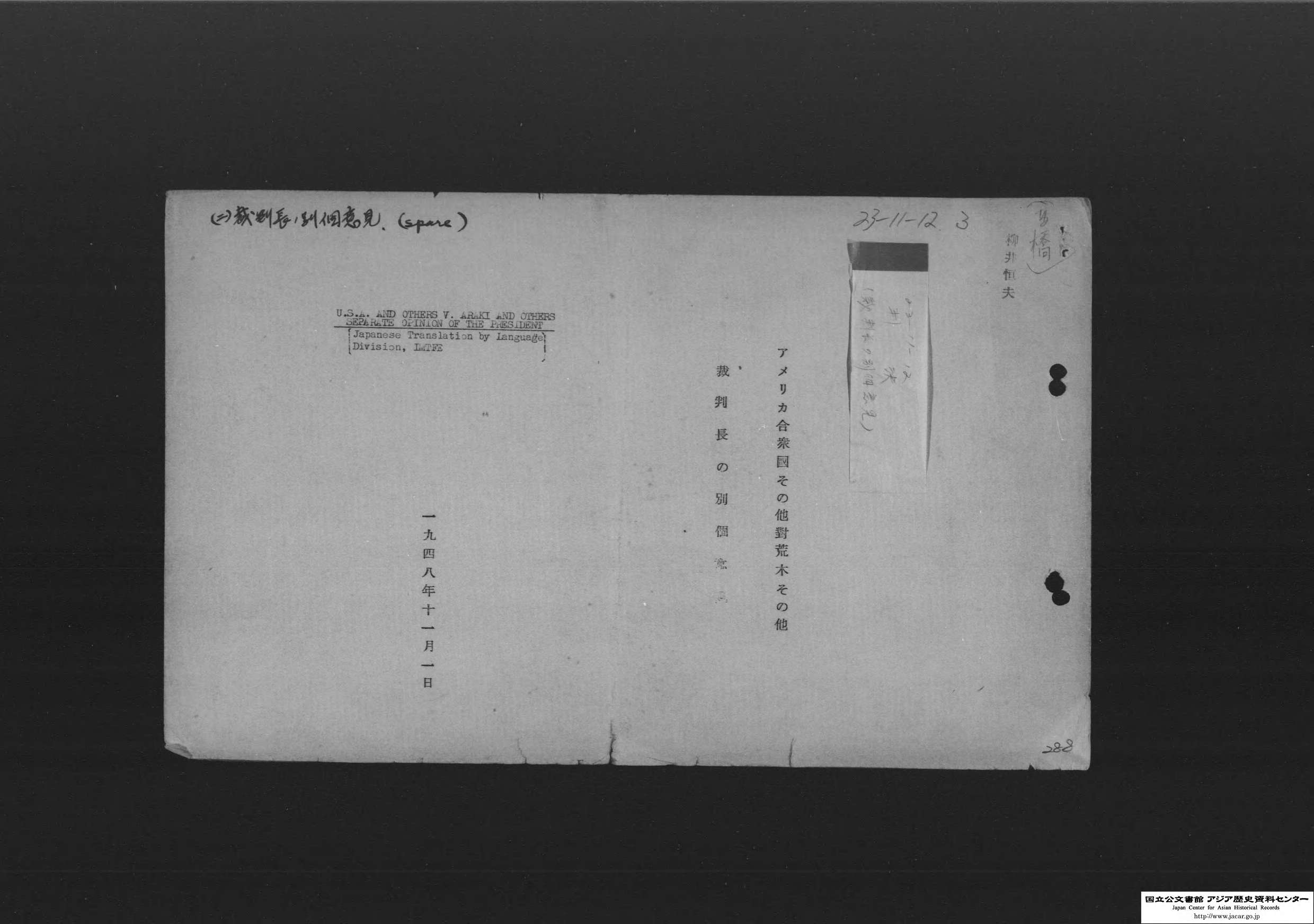
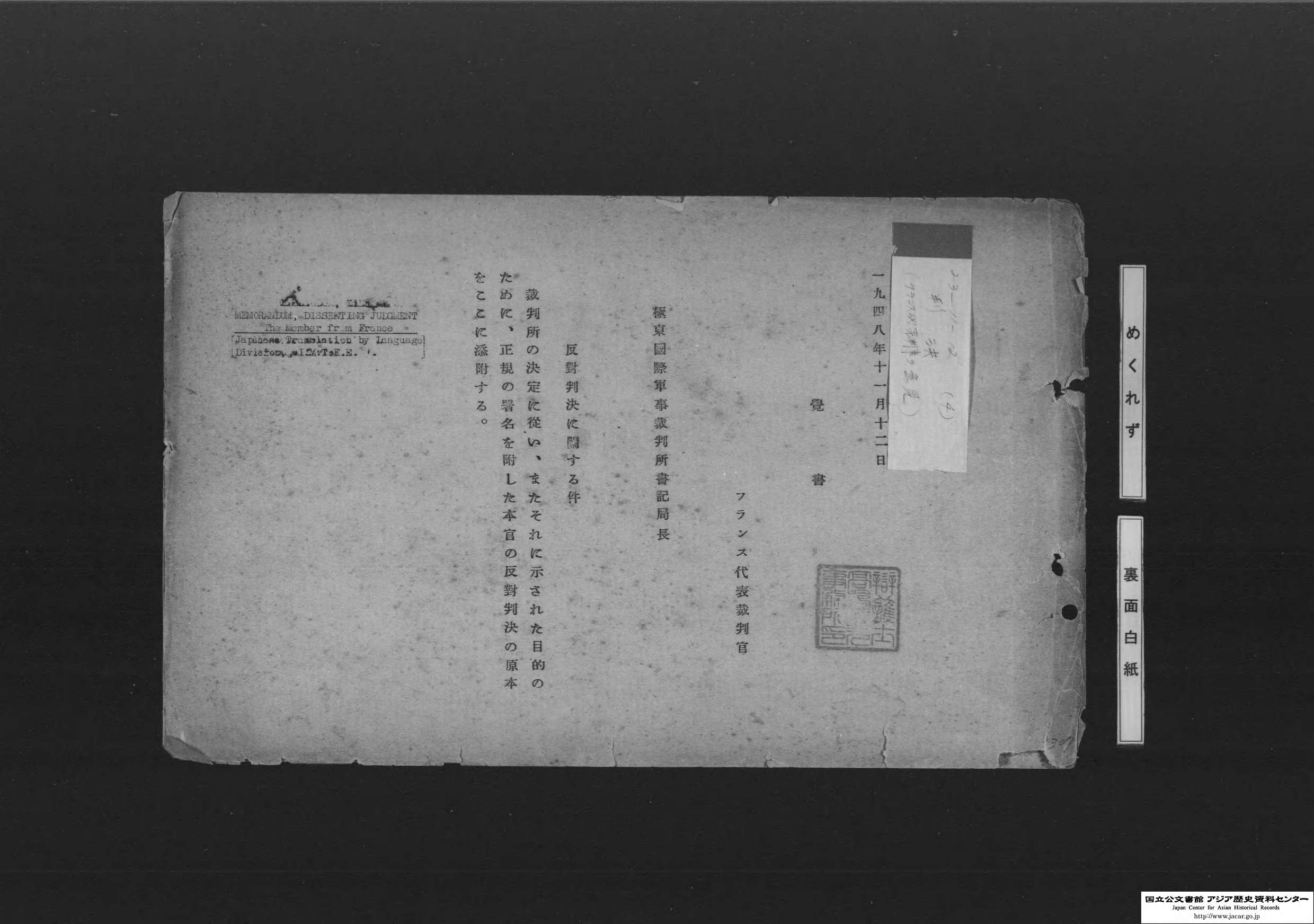
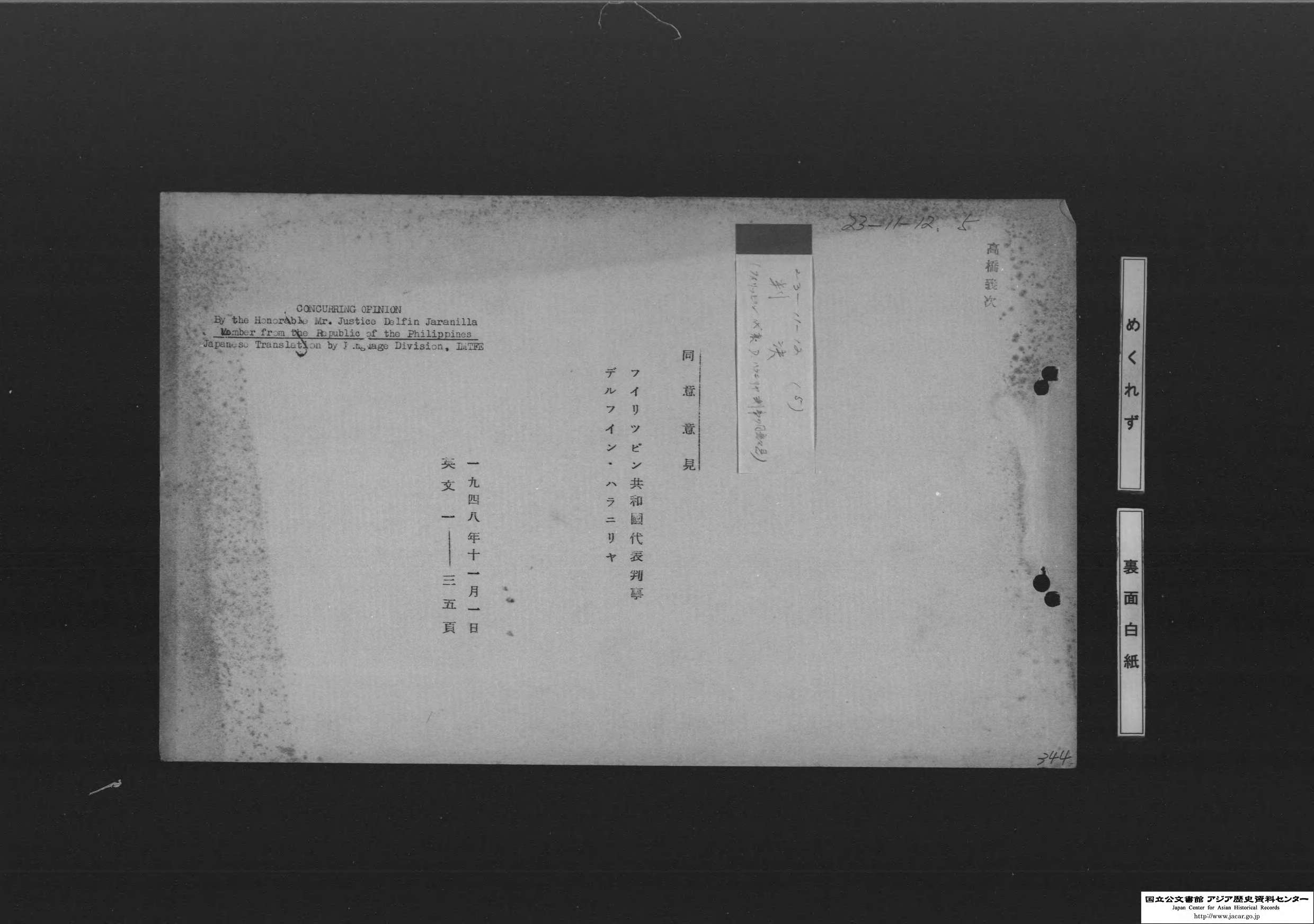
In January 1946, General Douglas MacArthur established the International Military Tribunal for the Far East. The Tribunal had jurisdiction over trials for “Crimes Against Peace” (Class A war criminals), “War Crimes” (Class B war criminals), and “Crimes Against Humanity” (Class C war criminals). [Document 1] shows the cover, table of contents, and closing pages of the stenographic records of the judgements in the Class A war crimes trial. As can be seen from the table of contents, the reading of the judgment spanned seven days, including weekends. The concluding section states regarding the majority opinion that the judge representing India (Radhabinod Pal) dissented, while the judges representing France (Henri Bernard) and the Netherlands (Bert Röling) dissented in part. Each submitted their respective written opinions. Furthermore, the judge representing the Philippines (Delfin Jaranilla) concurred with the majority opinion and submitted a separate opinion.
[Document 2] consists of the cover pages and opening sections of Justice Pal’s judgment; there are five volumes in total. [Document 3] consists of the cover pages of Justice Reiling’s opinion (starting with the second image), the presiding judge’s separate opinion (starting with the 290th image), Justice Bernard’s dissenting opinion (starting with the 310th image), and Presiding Justice Jaranilla’s concurring opinion (starting with the 347th image).
◆ War Criminals on Trial and Detainees in China and Southeast Asia
[Document 4] Item: “Displaced people list related to war criminal” C14061078900 (Images 2–3 combined)
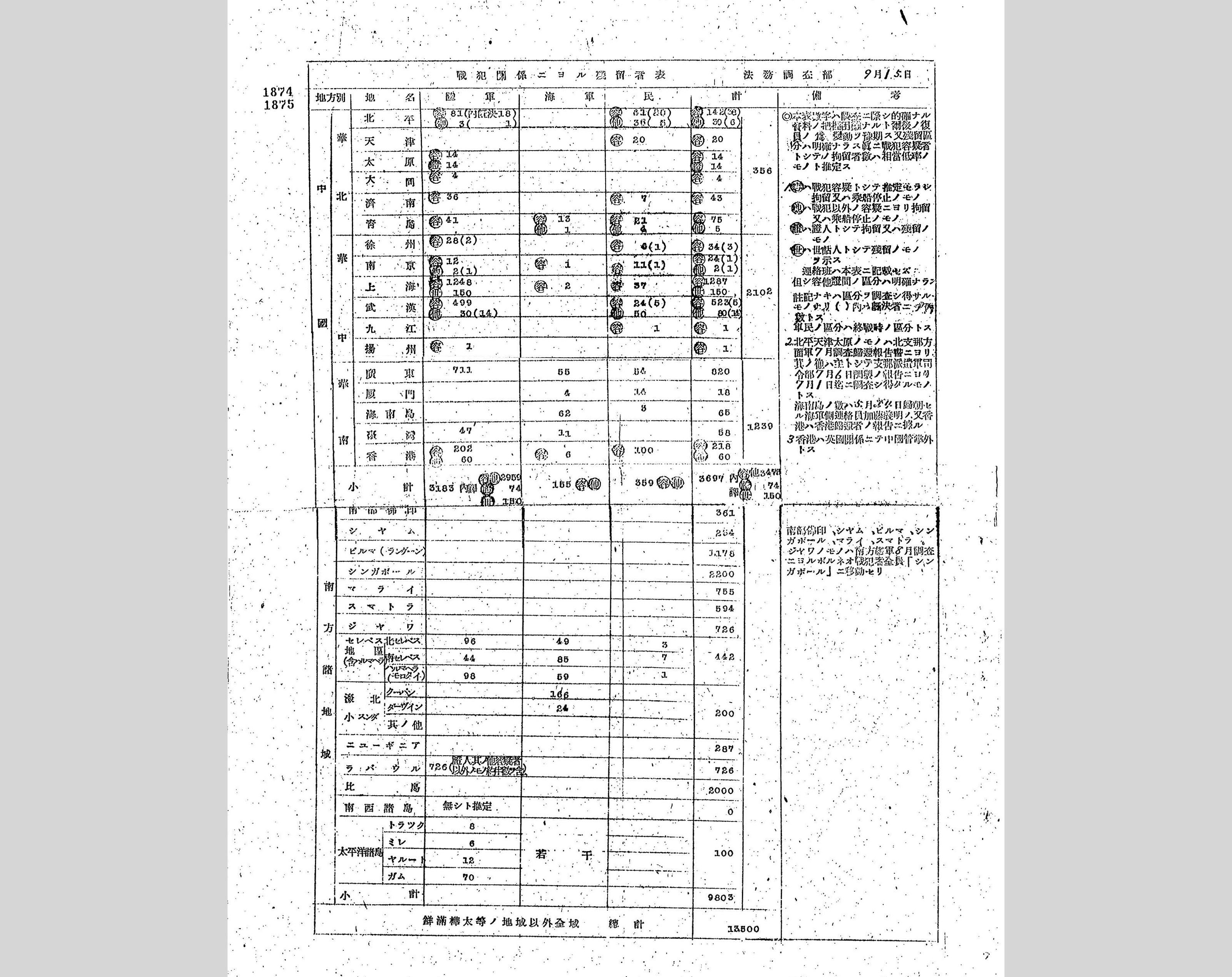
[Document 4] is a table summarizing the number of individuals remaining abroad in connection with war crimes as of September 1946. It records that a total of 13,500 people including suspects, witnesses, and caretakers remained in mainland China, Southeast Asia, and other locations. The table was prepared by the Legal Investigation Division of the Demobilization Liaison Bureau.
*Please note that the National Archives of Japan (Main Office) holds the aforementioned Class A war crimes trial records ([Documents 1–3]), materials related to the defense of Class A war criminals that have not been digitized, materials related to the Class B and C war crimes trials, and other materials as part of a series titled “Sensō hanzai saiban kankei shiryō” [Materials related to war crimes trials]. For an overview of this collection and information on how to access and search it, please refer to the National Archives of Japan Research Guide 002 (Japanese only).
◆The Sensō Chōsakai (War Investigation Commission) and the Subjects of Its Investigations
[Document 5] Item: “Investigation items (Plan)” A20040001500 (Images 1–4)
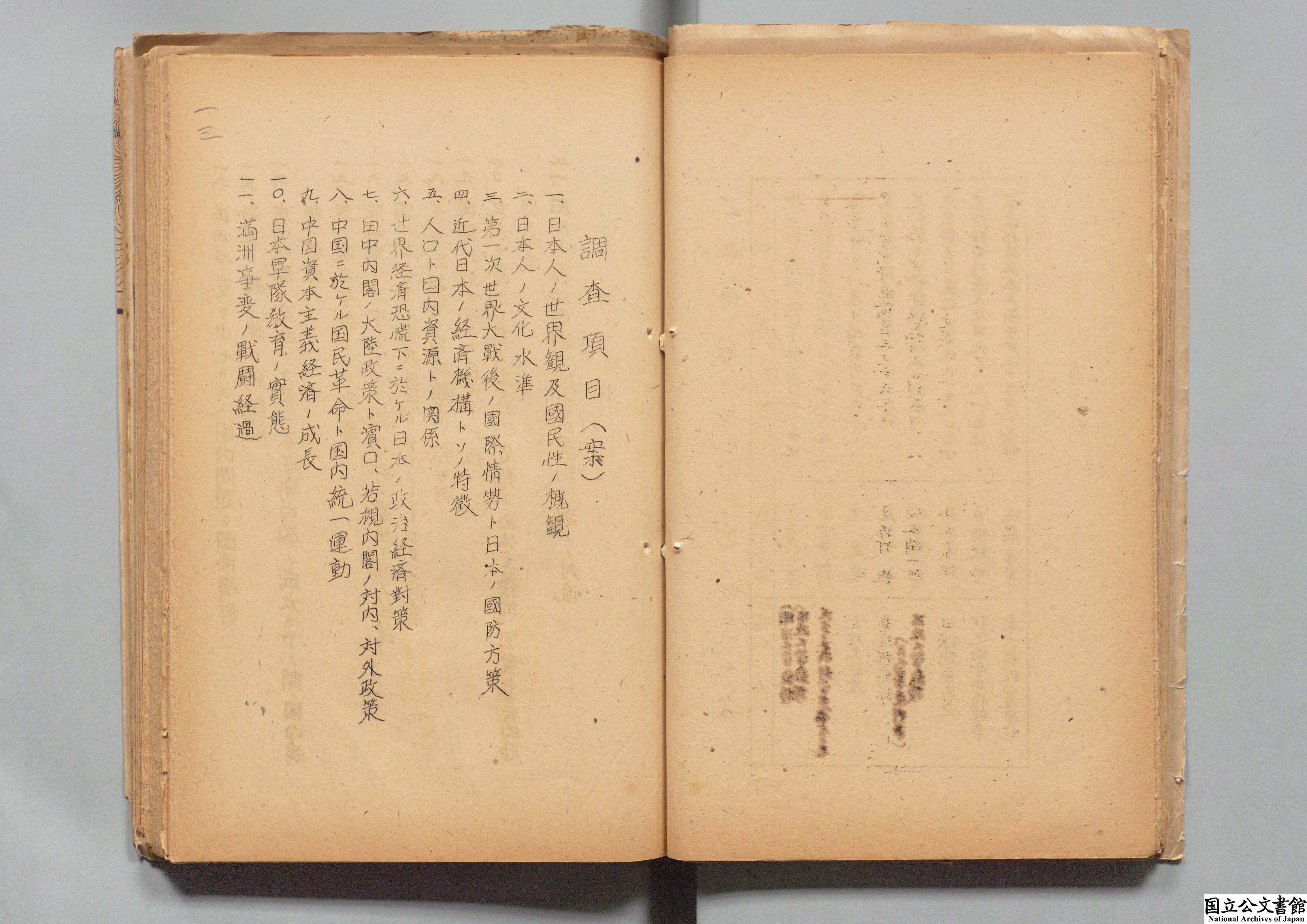
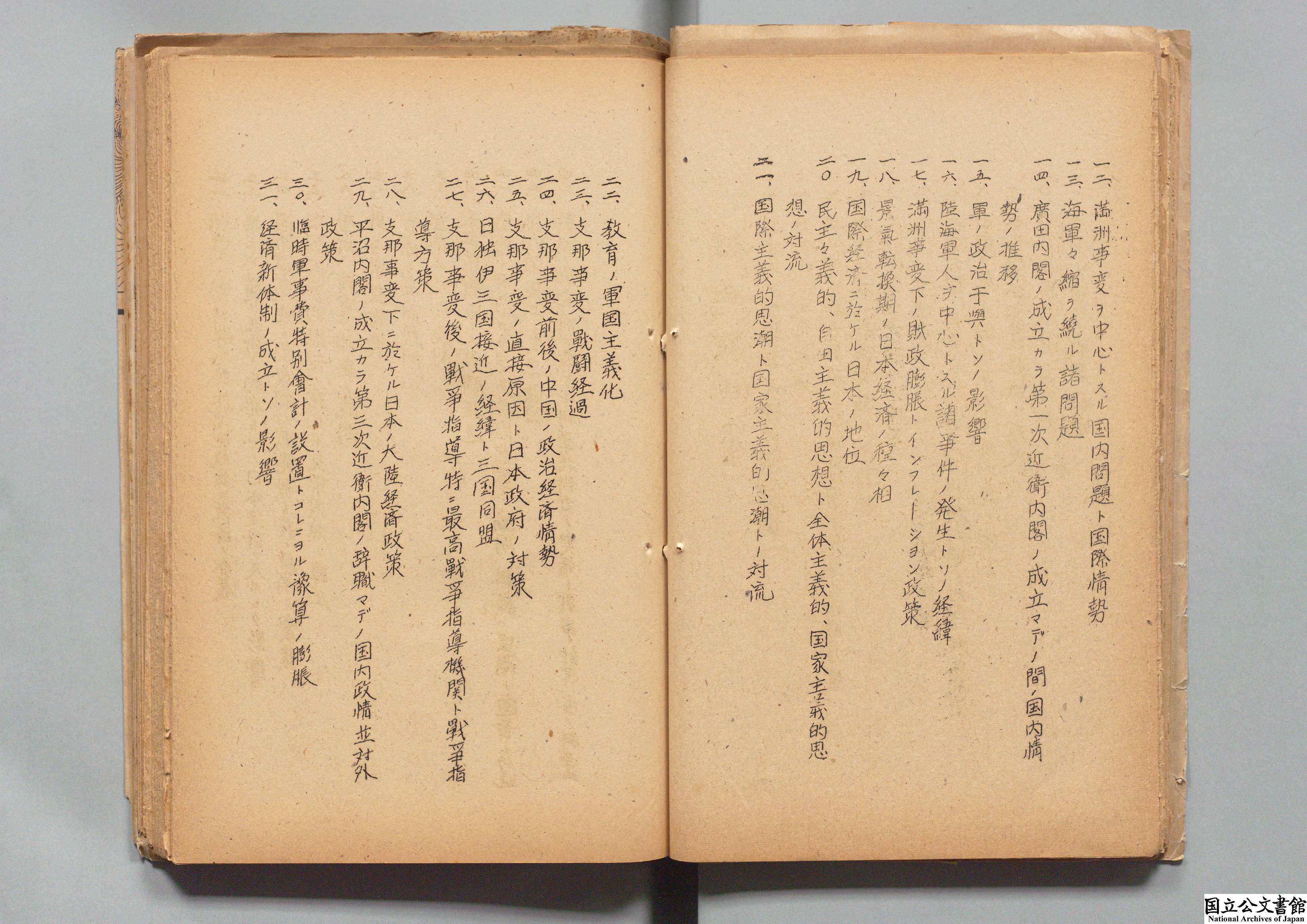
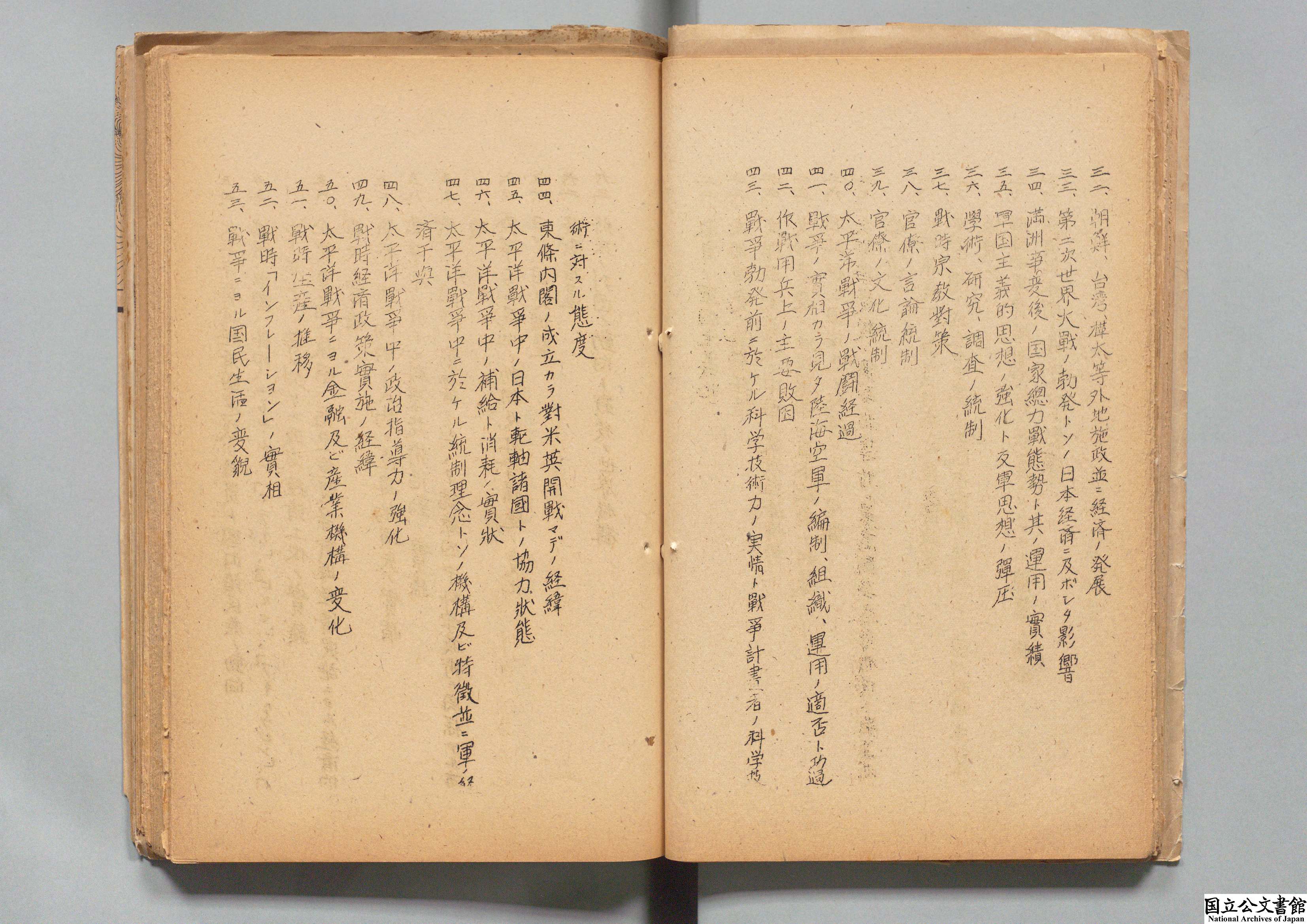
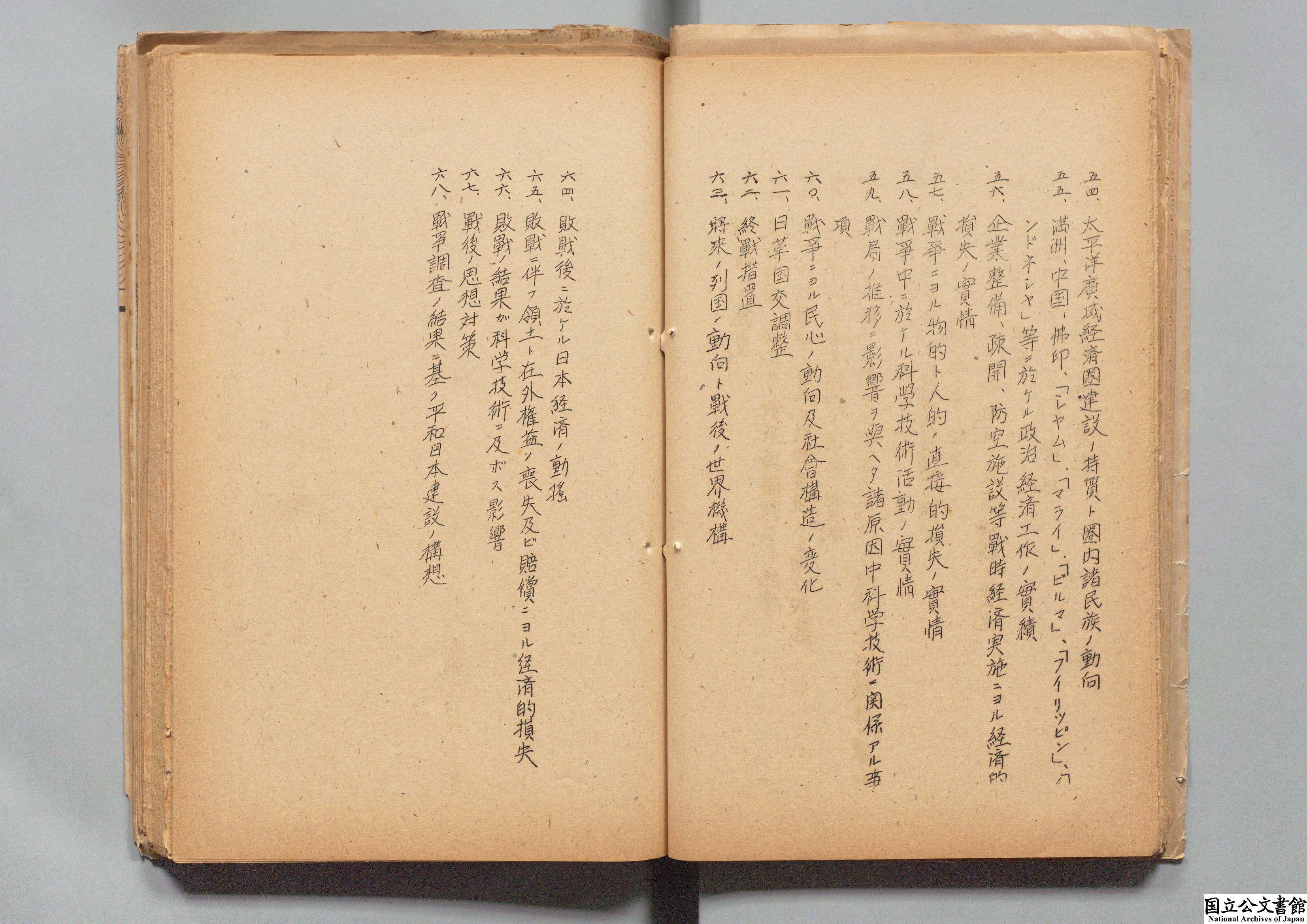
In November 1945, the Shidehara Kijūrō Cabinet established the “Daitōa Sensō Chōsakai” (Greater East Asia War Investigation Commission, later renamed the War Investigation Commission) to investigate the causes and actual circumstances of the war.
Five subcommittees were established: (1) Politics and Diplomacy, (2) Military Affairs, (3) Finance and Economy, (4) Ideology and Culture, and (5) Science and Technology. The following individuals were appointed as subcommittee chairs: Saitō Takao, member of the House of Representatives; Iimura Jo, former commander in the military police and former director of the Total War Research Institute; Yamamuro Munefumi, former chairman of Mitsubishi Trust; Baba Tsunego, president of the Yomiuri Shimbun; and Yagi Hidetsugu, president of Osaka Imperial University. Prime Minister Shidehara himself served as chairman.
JACAR has made publicly available in digitized form 16 volumes of documents left by the Commission’s secretariat (held by the National Archives of Japan) (series titled “Sensō Chōsakai jimukyoku” [War Investigation Commission secretariat]). [Document 5] is a list of research topics unofficially decided upon in August 1946 that is among the documents left by the Commission’s secretariat. The list of subjects for investigation began with “Nihonjin no sekaikan oyobi kokuminsei no gaikan” [An outline of the worldview and national character of the Japanese people] and concluded with “Sensō chōsa no kekka ni motozuku heiwa Nihon kensetsu no kosō” [An idea for building a peaceful Japan based on the results of the war investigation.” In addition, the Secretariat also engaged in other tasks such as working to ascertain the status of materials held by various ministries and agencies, conducting interviews with relevant individuals, and investigating records at munitions factories, research institutes, and so forth across the country.
However, after questions were raised about the existence of the War Investigation Commission within the Allied Council for Japan (the Allied powers’ organization supervising the occupation of Japan ), it was abolished in September 1946 in accordance with the wishes of the General Headquarters (GHQ) of the Supreme Commander for the Allied Powers (SCAP).
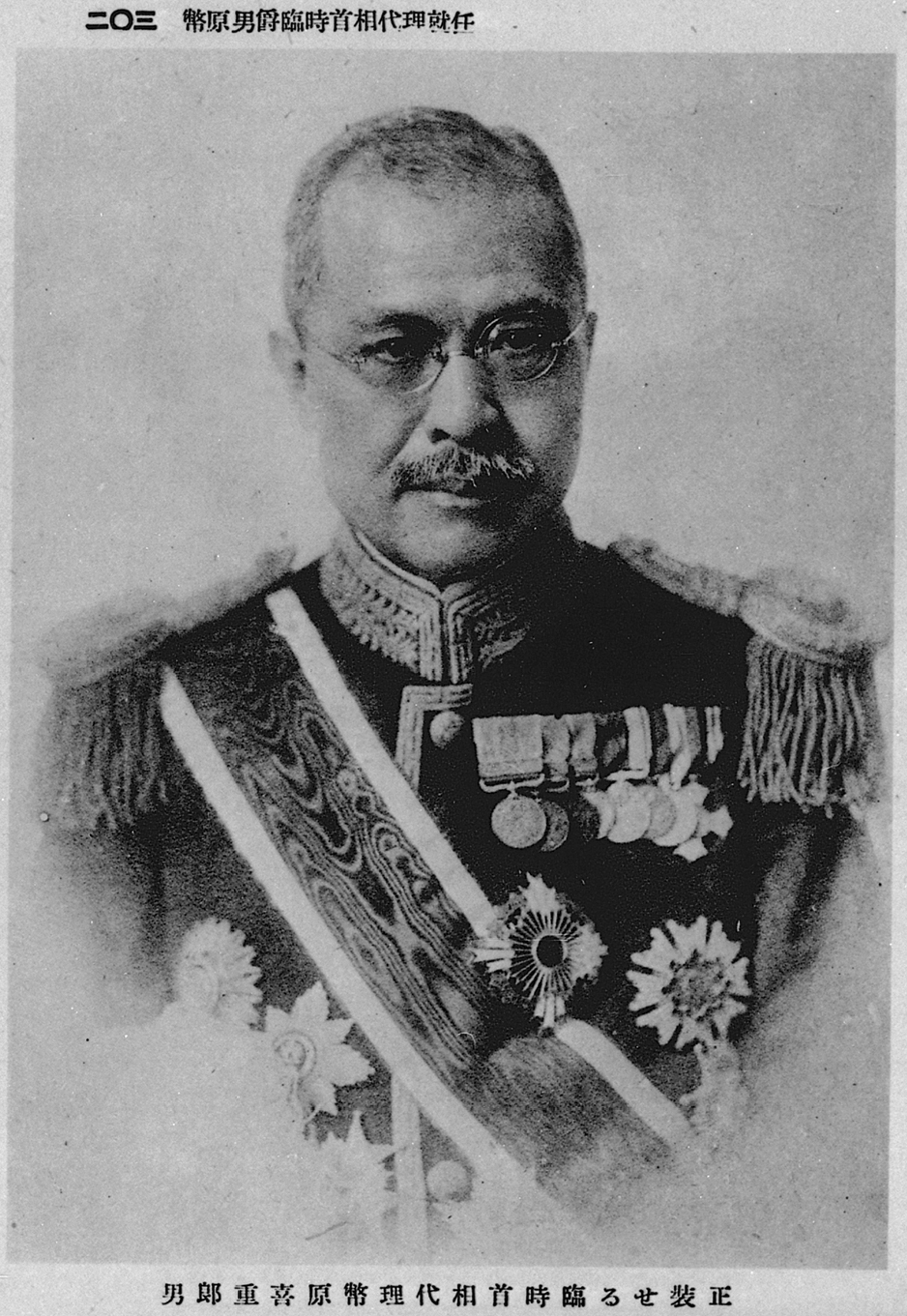
(Reference: Shidehara Kijūrō (from the National Diet Library’s “Portraits of Modern Japanese Historical Figures”))
◆“Nihon gaikō no kago” [Japanese diplomacy’s mistakes]
[Document 6] Item: “15: ‘Japanese Diplomacy’s Mistakes’ and Related Findings” B25090785300 (Images 32–33)
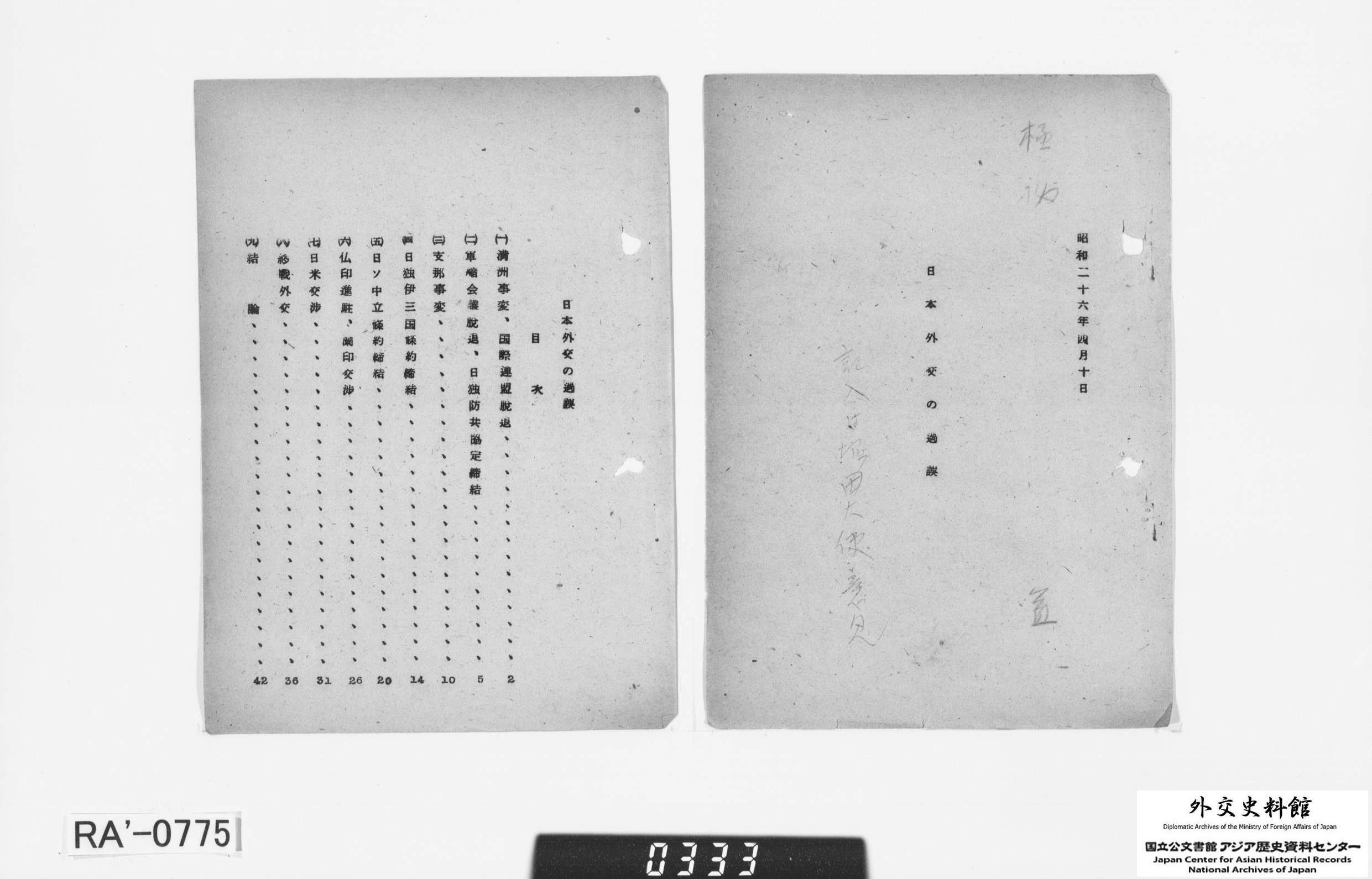
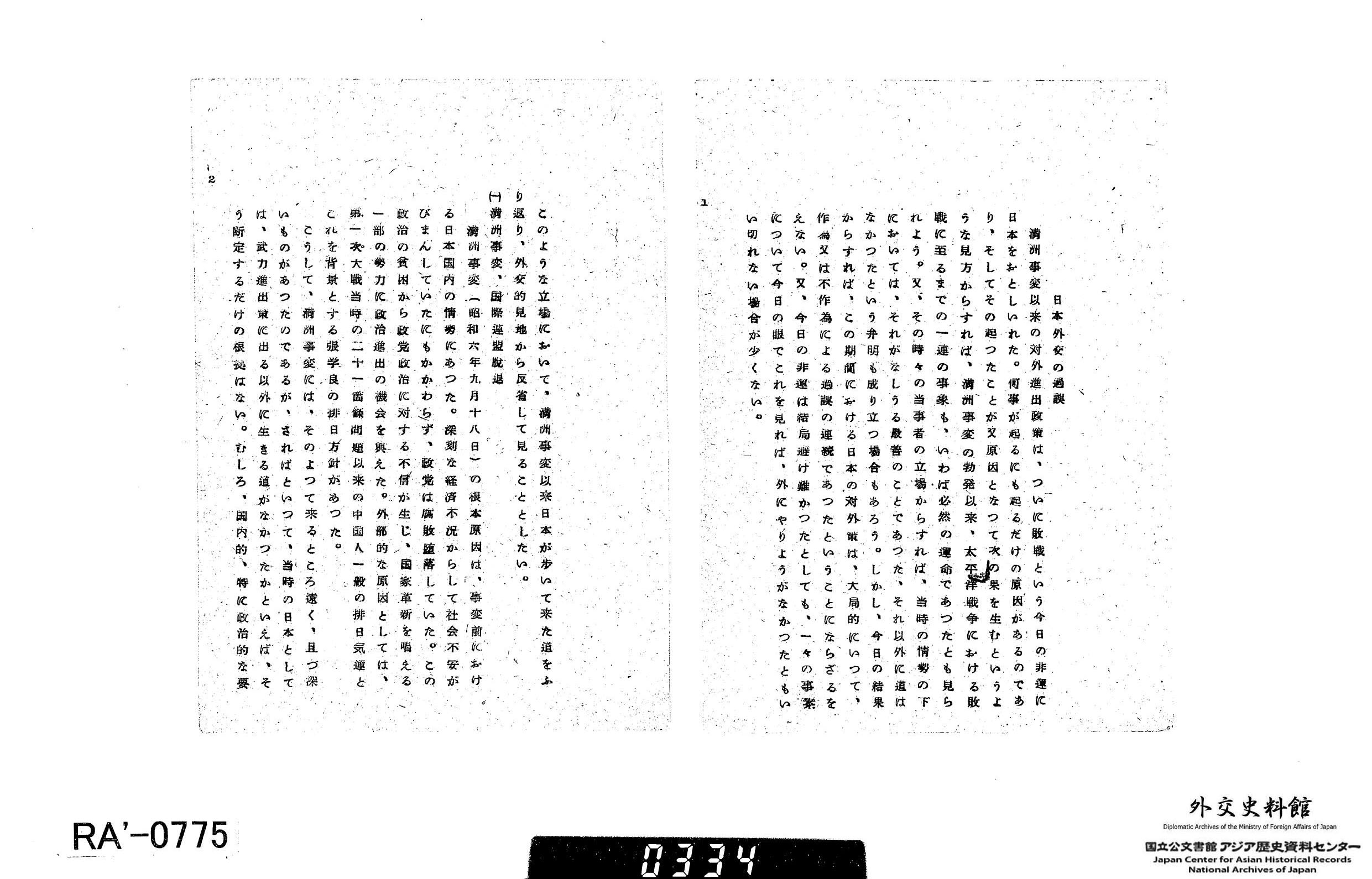
Prime Minister Yoshida Shigeru instructed MOFA to review Japan’s diplomacy from the Manchurian Incident through the end of the war in preparation for progress toward a peace treaty with Japan, and to examine the stance MOFA should have taken to prevent the war or bring it to an early end. [Document 6] consists of the cover, table of contents, and opening section of the report titled “Japanese Diplomacy’s Mistakes” that was compiled as a result of this review. It states, “Based on today’s findings, from a wider standpoint it must be concluded that Japan’s foreign policy during this period was a series of mistakes due to either action or inaction.”
Incidentally, handwritten notes by Prime Minister Yoshida can be seen in various places in the draft from March (starting with the 7th image); on the cover, one can also make out a note that reads, “I will try giving a lecture to ministry staff based on the intent of this draft and get their feedback” (Reference: Journal of the Diplomatic Archives, No. 34, frontispiece).
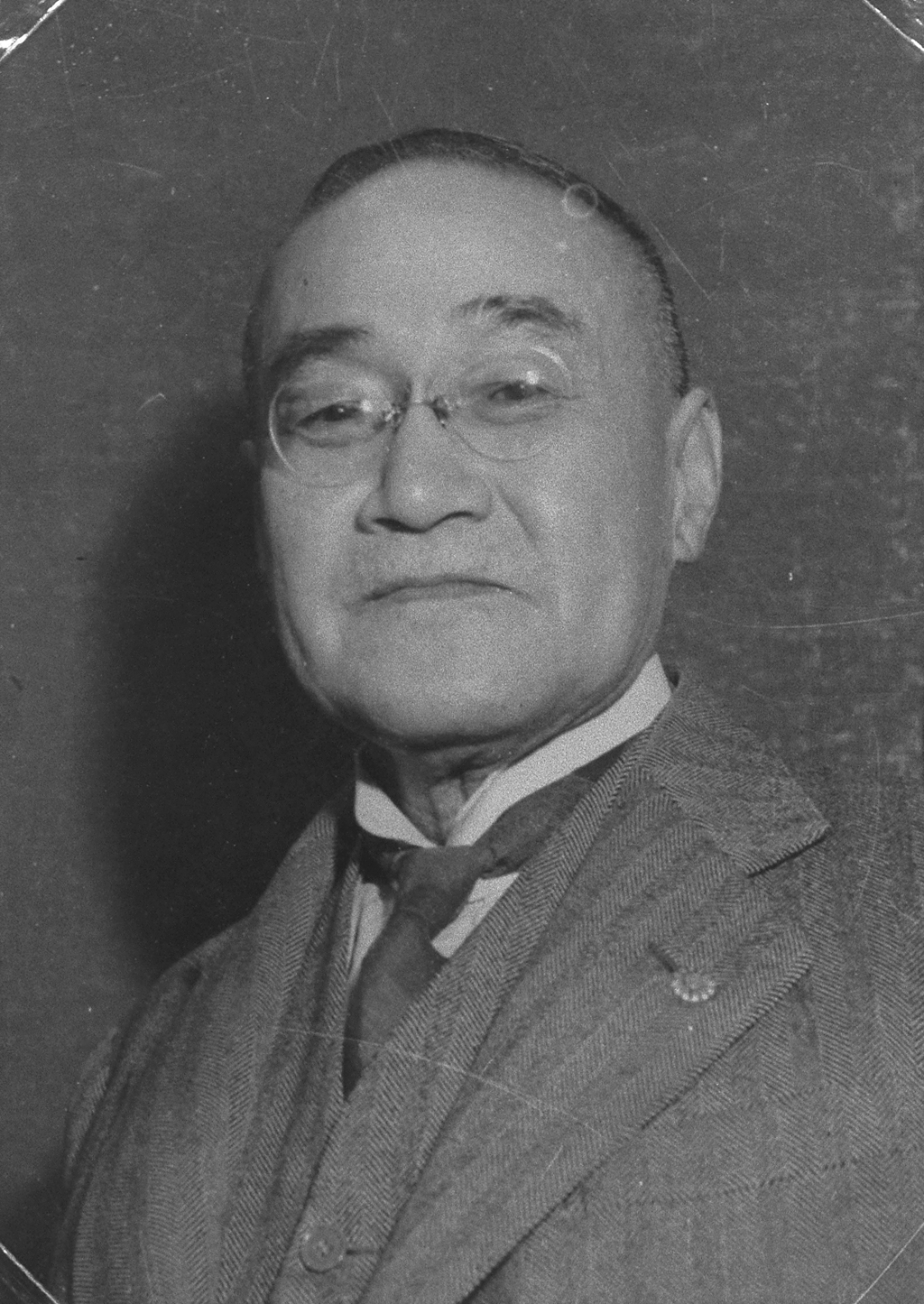
(Reference: Yoshida Shigeru [from the National Diet Library’s “Portraits of Modern Japanese Historical Figures”])
◆Interim Reparations During the Occupation Period
[Document 7] Item: “(10) Reparation problem progress chart”B19010377400 (Image 2)
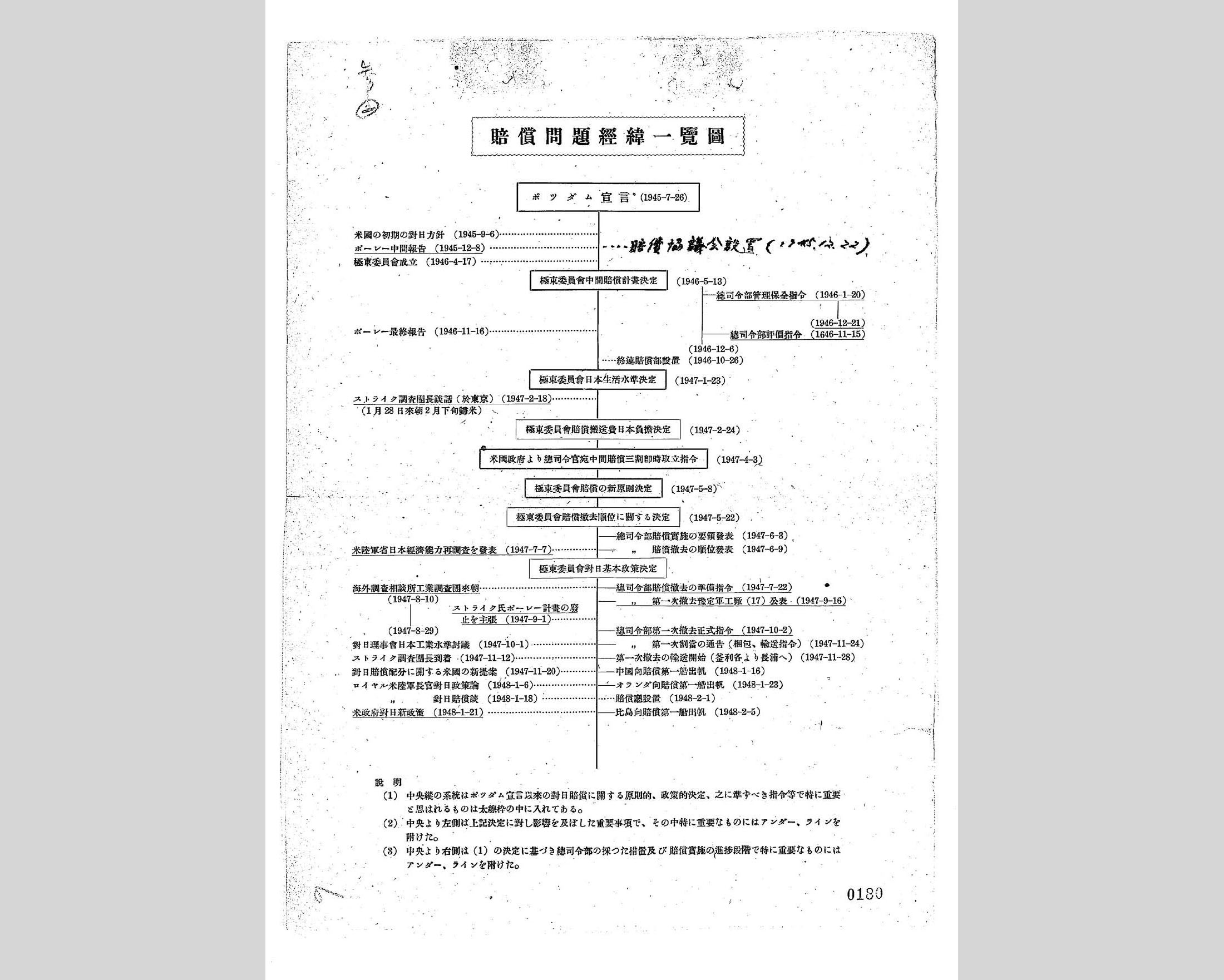
On the issue of reparations, the Allied Powers devised a plan to transfer physical assets such as Japanese factory equipment to China and other affected nations; it was implemented starting in 1947. Since this did not constitute complete reparations under the peace treaty, they were referred to as “interim reparations.” [Document 7] is a chart compiled by the Investigation Section of the Reparations Bureau that summarizes the state of interim reparations as of January 1949.
It was decided in 1949 to suspend these interim reparations amid a shift in occupation policy that would begin to prioritize Japan’s economic self-reliance. The final transport ship set sail in May 1950.
During these years, machine tools, scientific and technological equipment from former military arsenal laboratories, thermal power generation facilities, and so forth were shipped out as reparations. Although figures vary depending on the source, records indicate that approximately 40,000 to 50,000 machines were shipped out (see Ministry of Finance, Financial History Office, ed., Shōwa zaiseishi [A financial history of Shōwa].
◆The San Francisco Peace Treaty
[Document 8] Item: “Matters of Promulgation of the Peace Treaty with Japan and Related Documents (Ex Post Facto Report) (Ministry of Foreign Affairs)” A17112577900 (Images 2–4)
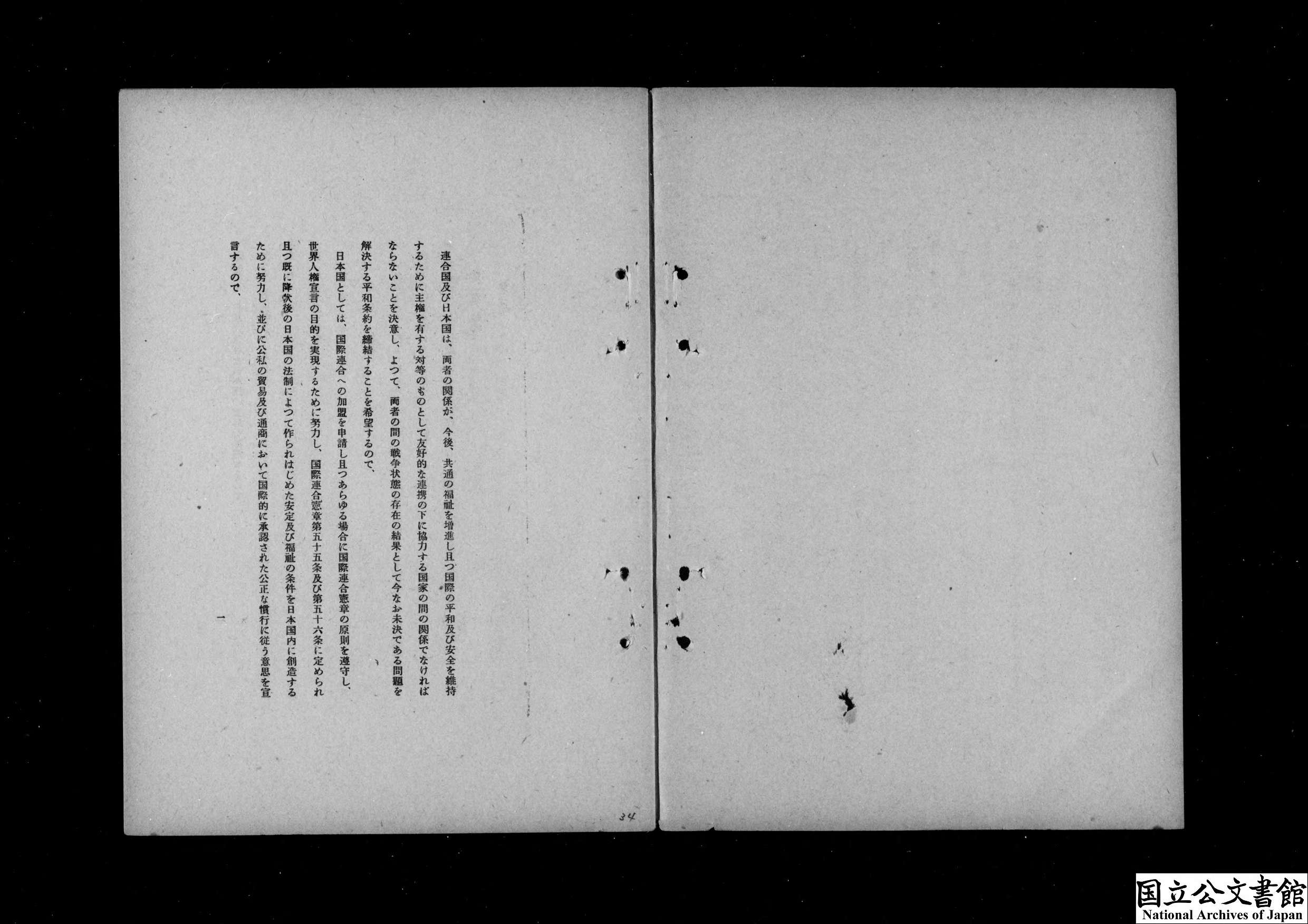
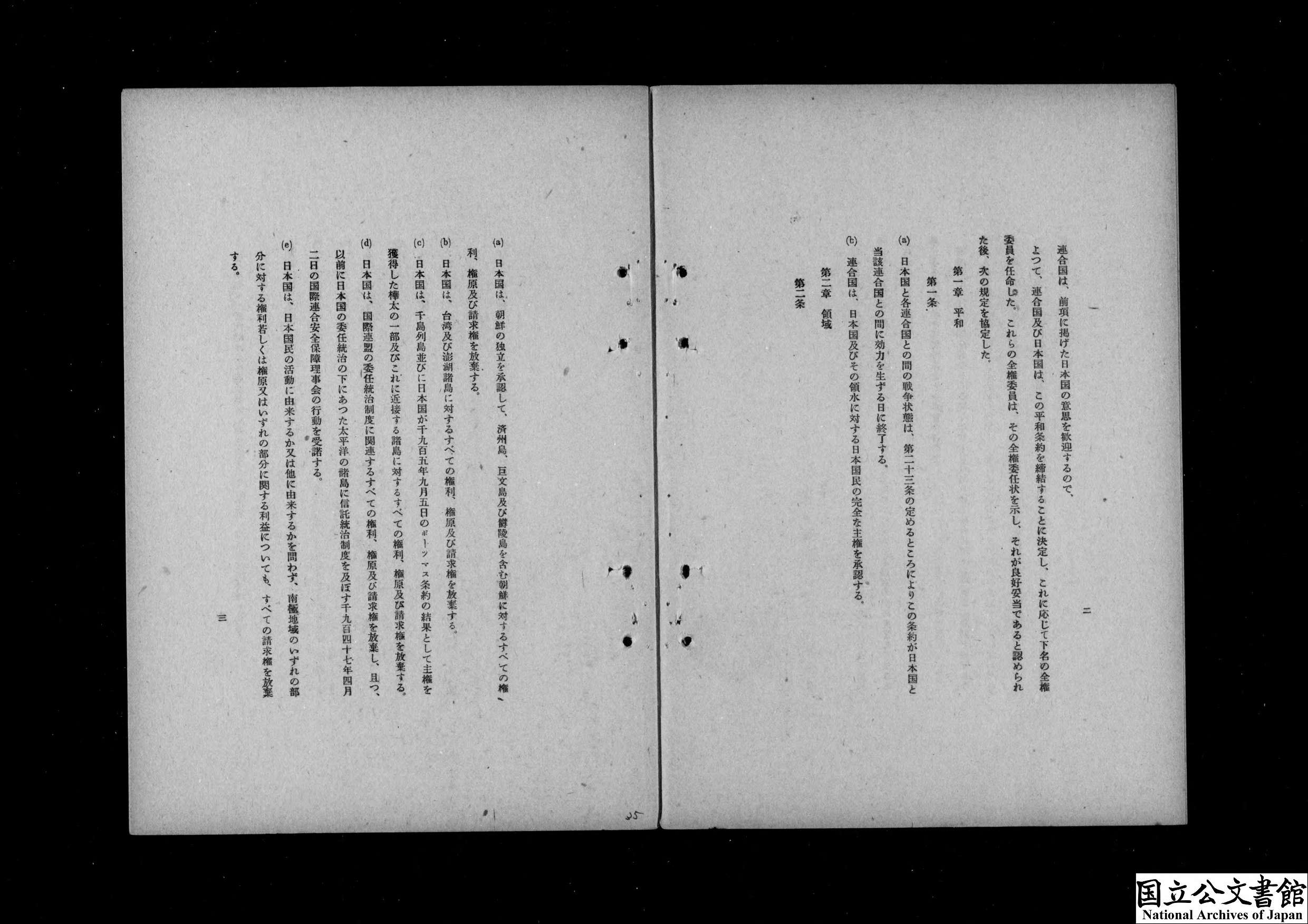
In September 1951, a peace conference was held in San Francisco, United States. Fifty-two countries, including Japan, participated. Forty-nine countries signed the peace treaty, which went into effect in April of the following year.
From Asia, Cambodia, Ceylon (now Sri Lanka), Indonesia, Laos, Pakistan, the Philippines, and Vietnam and participated in the peace conference and signed the treaty (Indonesia did not ratify it). Burma and India did not participate, and the People’s Republic of China (PRC) and the Republic of China (ROC) were not invited.
[Document 8] is the opening portion of the treaty text as included in the materials from the Cabinet deputy ministers’ meeting held on the same day.
Among the issues settled by the treaty were the termination of the state of war and the recognition of Japan’s sovereignty (Article 1); the recognition of Korea’s independence and the renunciation of all right, title and claim to Taiwan, the Penghu Islands, the Kuril Islands, the southern part of Sakhalin, and the South Seas islands (Article 2); the treatment of the Nansei Islands (including the Ryūkyū Islands) and the Nanpō Islands (including the Ogasawara Islands) (Article 3); acceptance of the judgments of the International Military Tribunal for the Far East and other Allied war crimes courts within and outside Japan (Article 11); and provisions regarding reparations (Article 14).
The United States and the United Kingdom, which led the conference, had adopted a policy of not demanding reparations out of a desire for Japan to become economically self-reliant at an early date; however, other nations raised objections, and provisions regarding reparations were added.
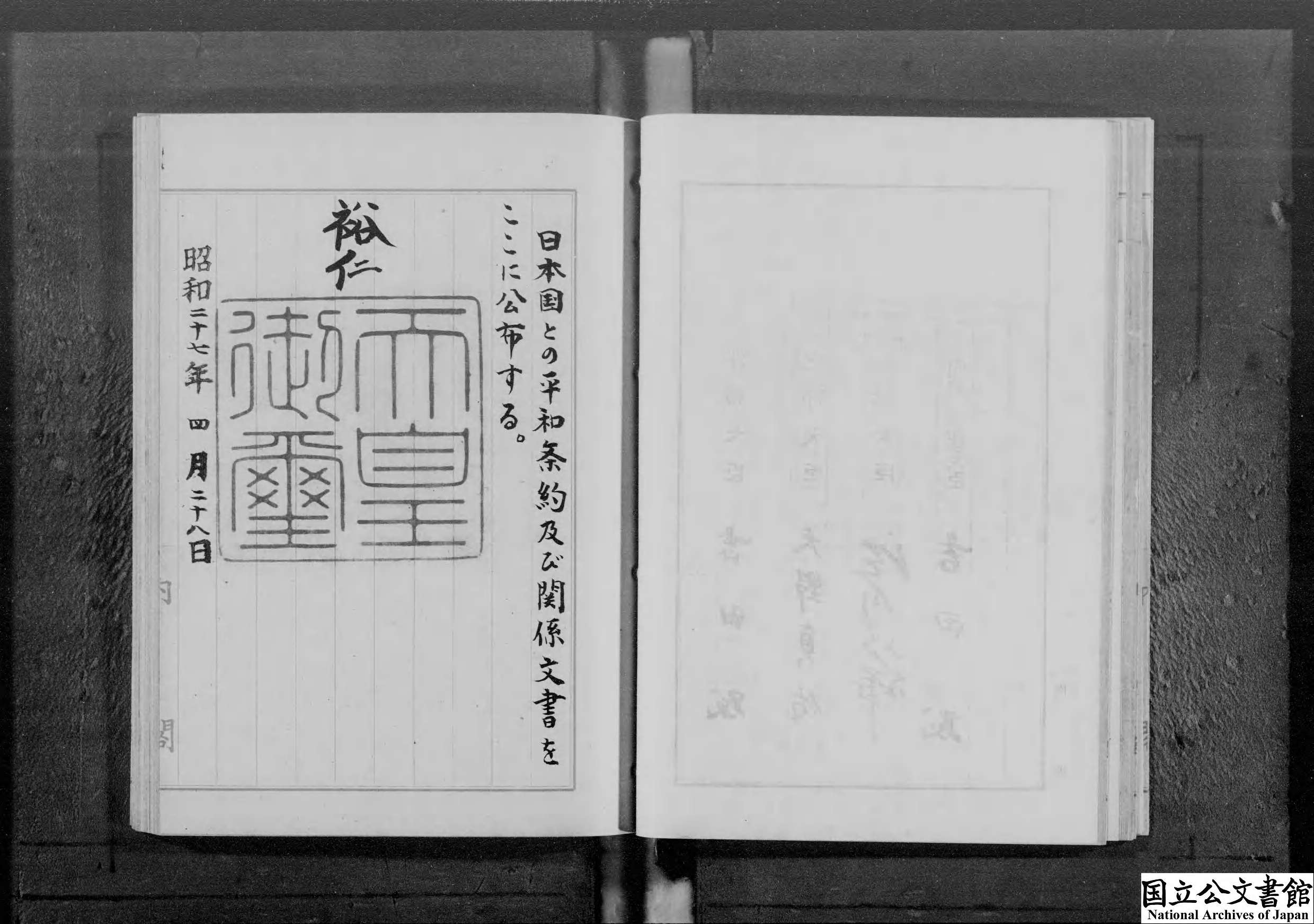
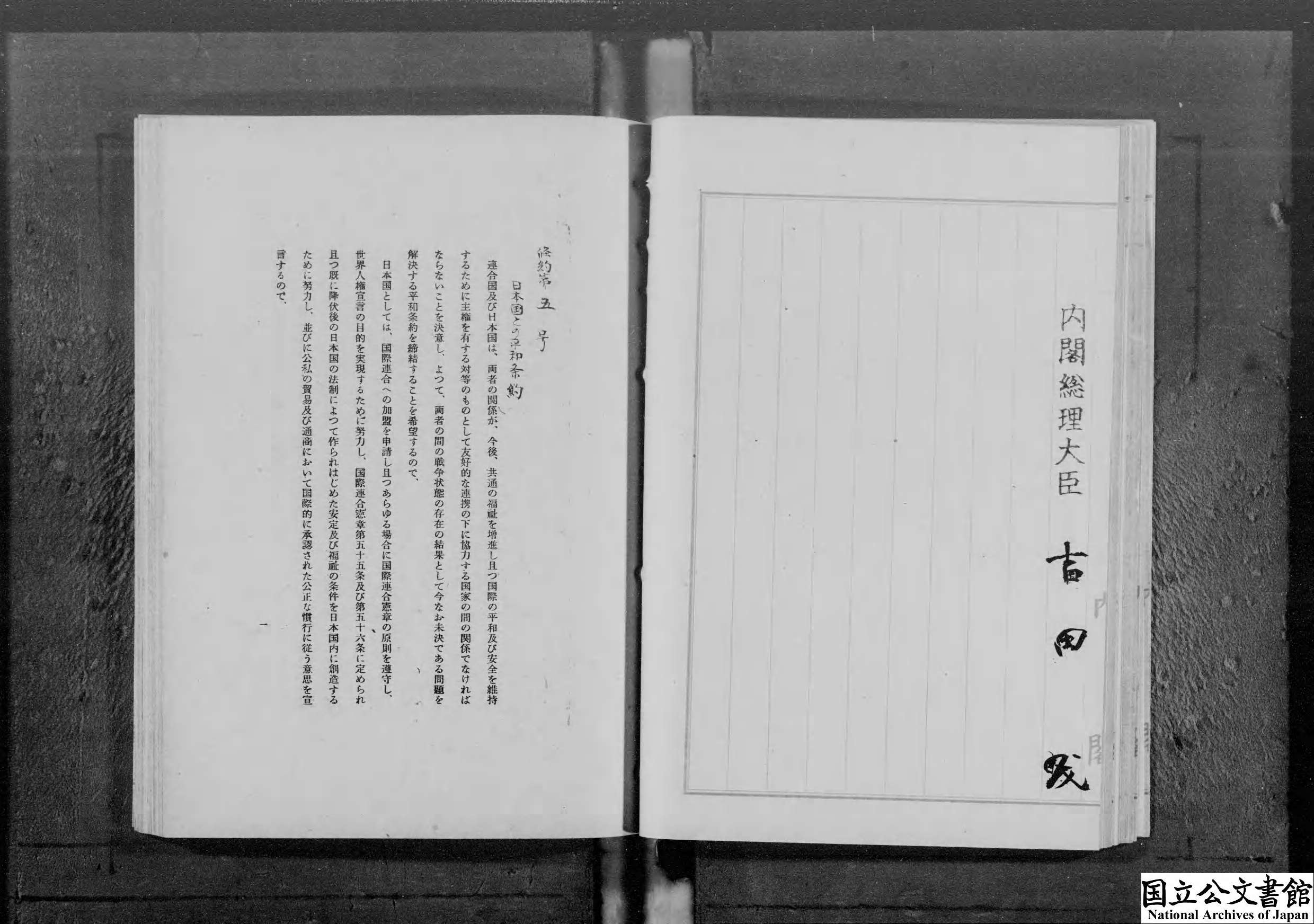
The signed master copy from the time of promulgation (National Archives of Japan collection)
